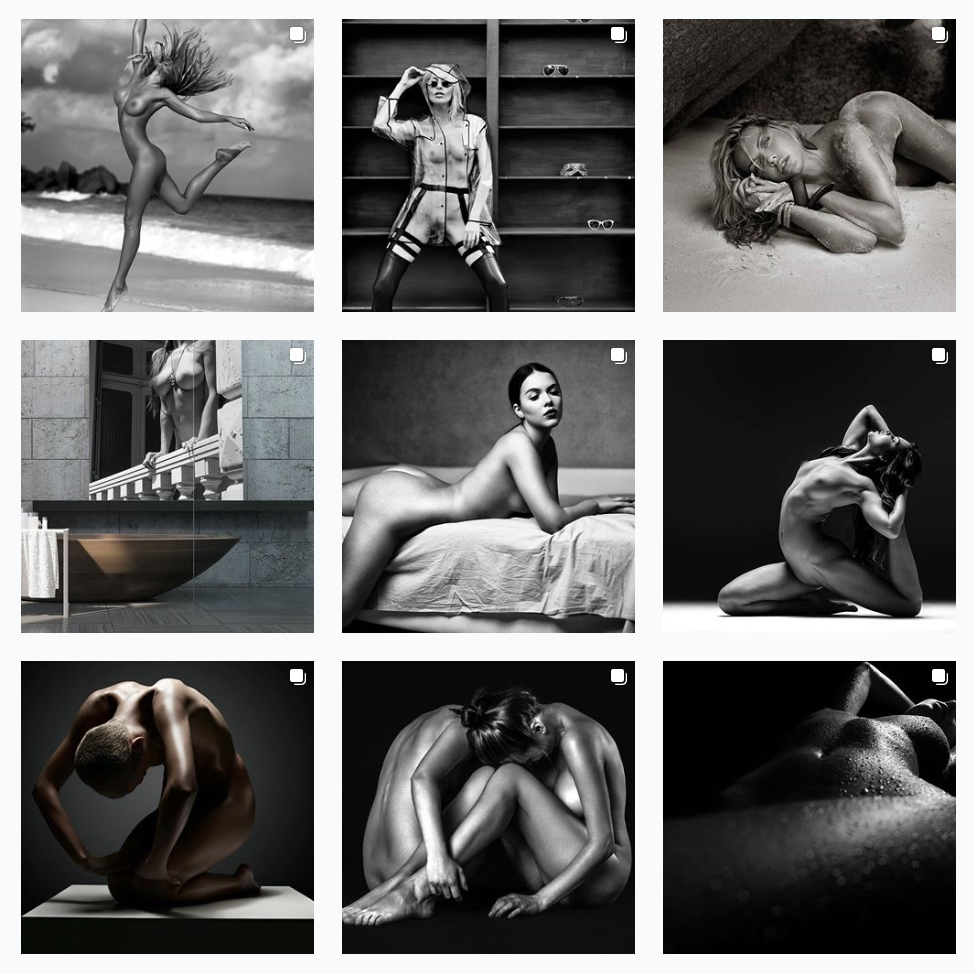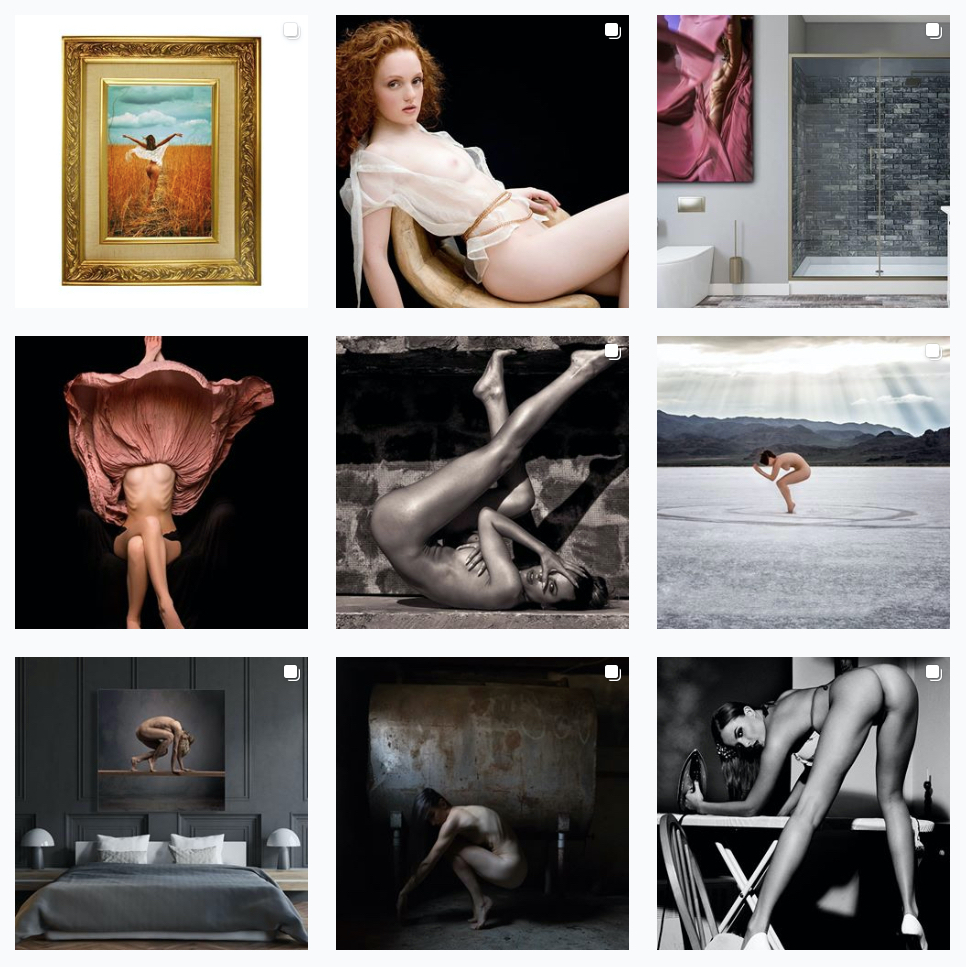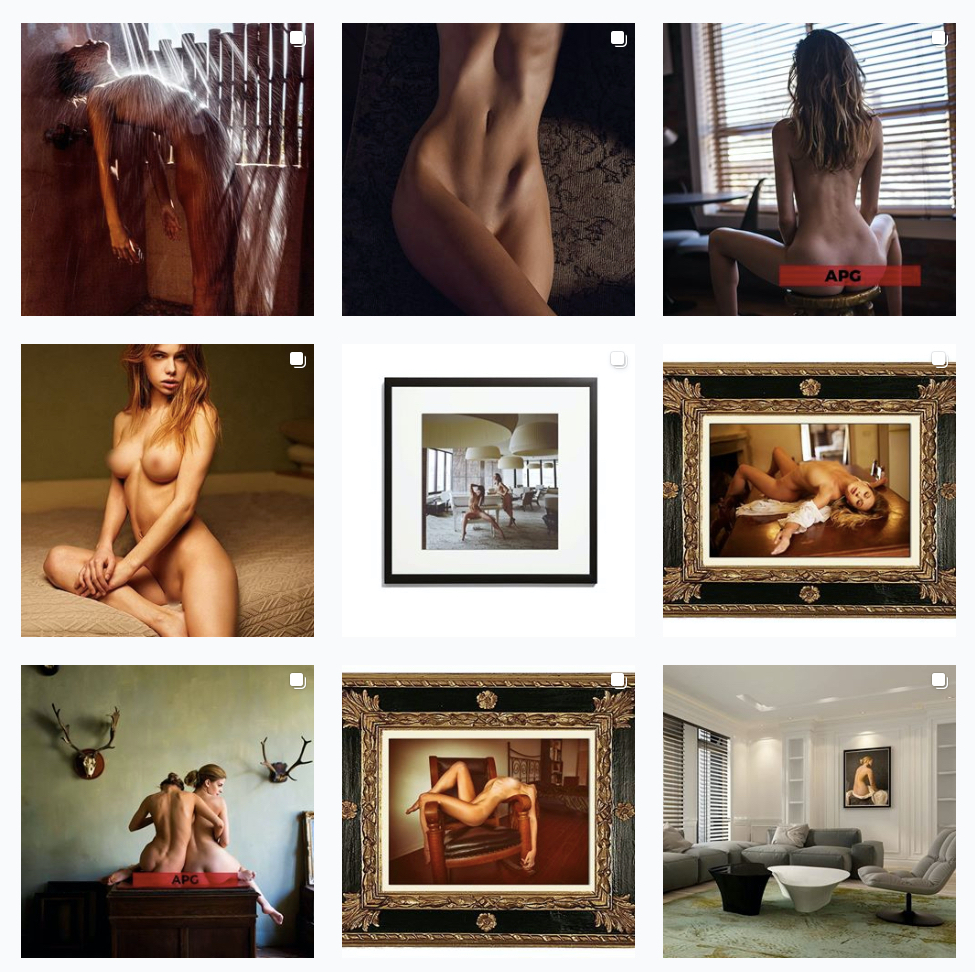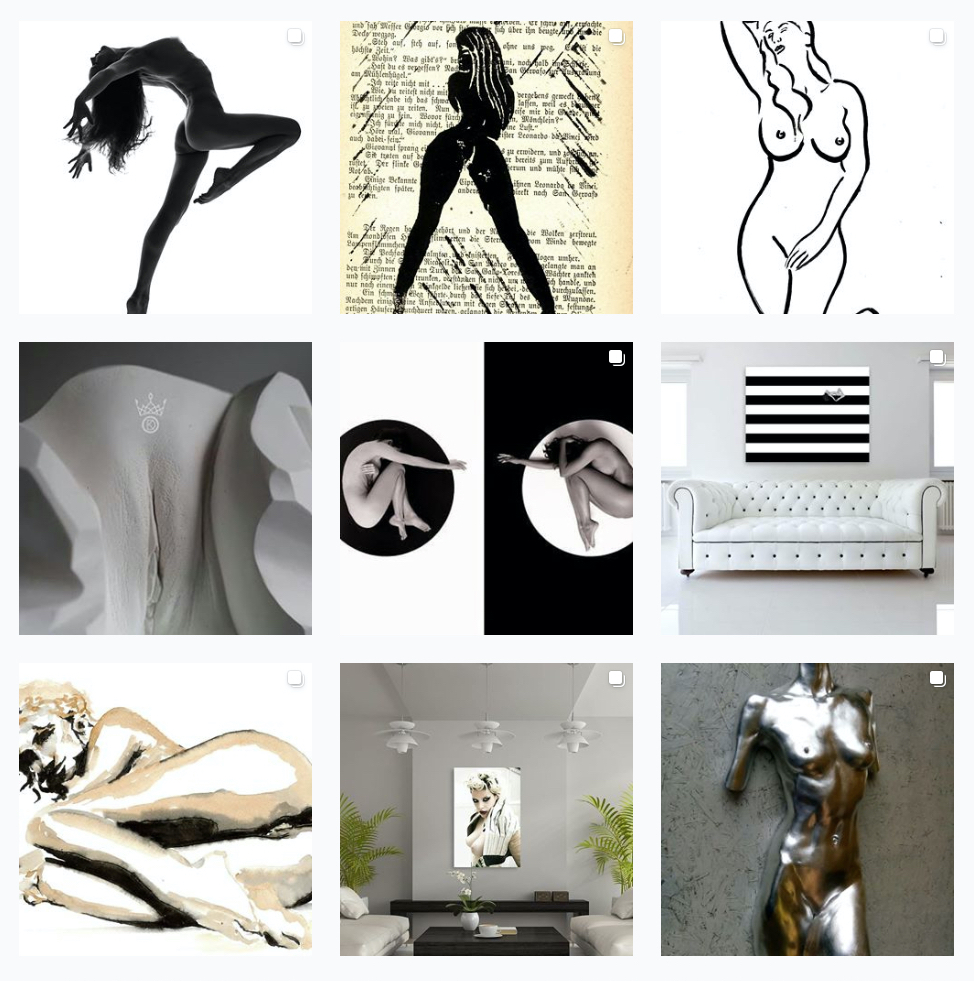
• What Makes a Great Photographer?

    The Difference Between Taking Pictures and Creating Art We live in a photographic age. Less than two centuries after the world’s first recorded photograph, the medium has become so common that nearly...

    The Difference Between Taking Pictures and Creating Art

    We live in a photographic age.

    Less than two centuries after the world’s first recorded photograph, the medium has become so common that nearly everyone now carries a camera in their pocket. Photography is no longer rare, technical, or reserved for specialists. It is constant. Instant. Disposable. A language of daily life.

    We photograph our meals, our faces, our bodies, our lovers, our hotel rooms, our pets, our coffee cups, our reflections, and our own sadness. We document everything. We edit it. We post it. We delete it. Then we do it again.

    In a culture built on selfies, stories, filters, and curated feeds, everyone has taken themselves seriously as a photographer at least once.

    And yet, the sheer volume of images surrounding us raises an obvious question:

    If everyone is taking photographs, what actually makes someone a great photographer?

    What separates an image that is merely captured from one that lingers? What distinguishes a person who records a moment from an artist who transforms it?

    The answer is not gear. It is not access. It is not even technical perfection alone.

    Great photography begins where ordinary seeing ends.

    We Are Surrounded by Images, But Not All Images Matter

    One of the strange consequences of the digital era is that photography has become both more accessible and more forgettable.

    We are flooded with images every day, yet very few stay with us.

    Most photographs are functional. They prove something happened. They preserve a face, a place, a meal, a mood, or a passing impulse. There is nothing wrong with that. Photography has always had a documentary function.

    But art begins when the photograph does more than record.

    A great photograph does not simply show you something.

    It makes you feel the presence of something.

    That may be tension. Longing. Beauty. Alienation. Desire. Loneliness. Power. Vulnerability. Seduction. Distance. Stillness. Memory.

    The strongest photographers do not just point the camera at the world. They decide how the world should be seen.

    Composition Is More Than Arrangement

    Like any visual art form, photography lives and dies by composition.

    This is one of the clearest differences between the casual image-maker and the serious photographer.

    An amateur often reacts quickly. They see something interesting and capture it before it disappears. Sometimes that instinct produces something remarkable. More often, it produces an image that feels accidental.

    A great photographer is rarely accidental.

    Composition is not just about placing subjects neatly within a frame. It is about control. It is about balance, tension, rhythm, space, interruption, proportion, and restraint. It is about deciding what belongs in the image—and just as importantly, what does not.

    Where does the eye land first?

    What is cropped out?

    What creates pressure in the frame?

    What creates silence?

    What feels intimate? What feels distant?

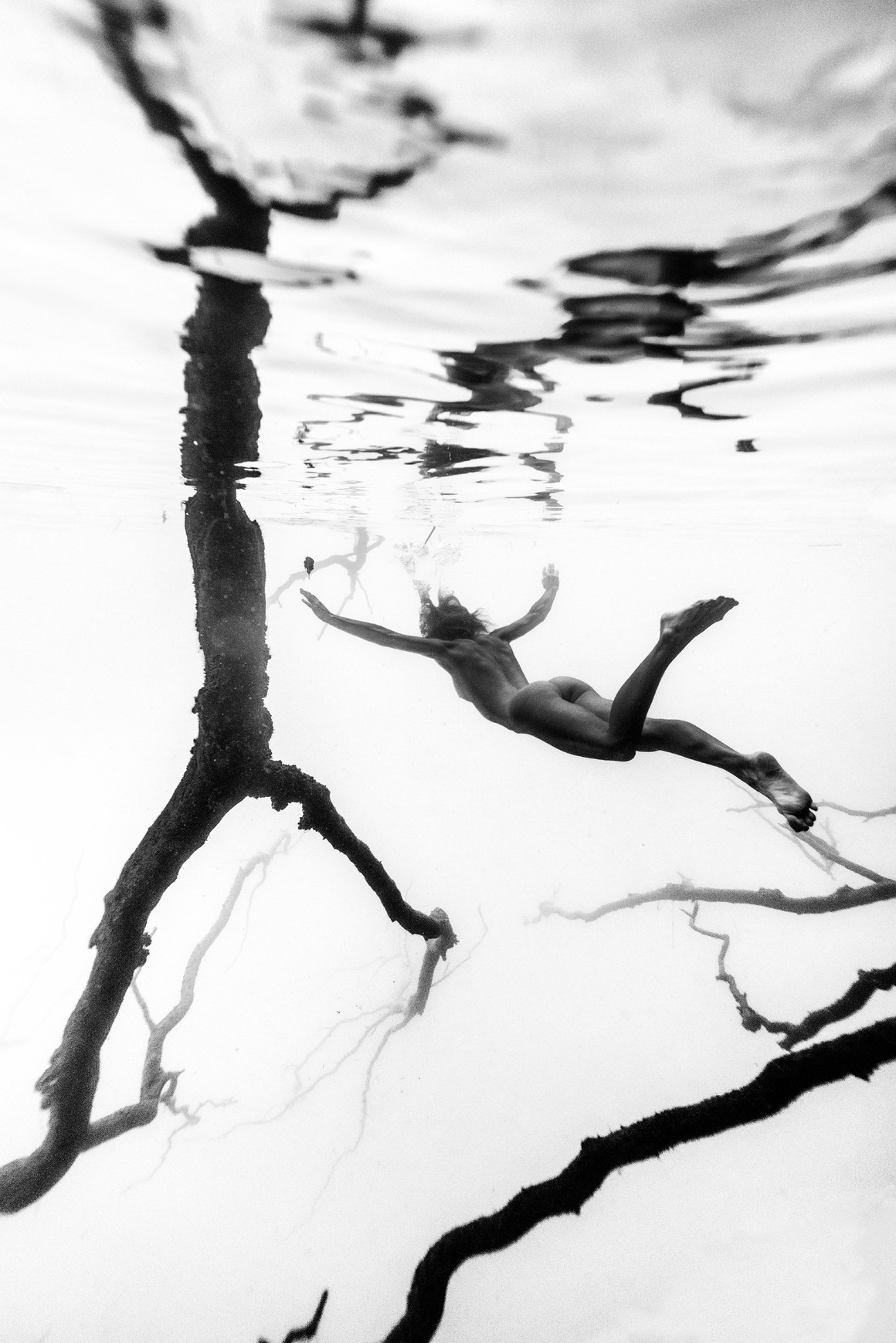
    In provocative or erotic photography, composition becomes even more powerful. A body can be made explicit or mysterious depending on what is withheld. A partial gesture can be more charged than full exposure. A shoulder, a mouth, a hand, the curve of a back, a stocking half-removed—these details can say far more than total revelation ever could.

    That is where photography begins to understand desire.

    Light Is Not Just Technical—It Is Psychological

    If composition gives photography structure, light gives it mood.

    Lighting is often treated as a technical issue, but in great photography it becomes something far more intimate. It shapes emotion. It creates atmosphere. It determines whether an image feels soft, severe, vulnerable, theatrical, detached, romantic, cold, or dangerous.

    This is especially true in black-and-white photography, where light is stripped of the distraction of color and asked to carry more of the emotional weight.

    In black-and-white, what is illuminated matters.

    So does what disappears into shadow.

    The line between revelation and concealment becomes sharper. Contrast becomes narrative. Shadow becomes tension. Skin becomes sculptural. The body becomes form, not just subject.

    This is one reason black-and-white nude photography can feel more psychologically loaded than color. It often asks the viewer to look more carefully, and in doing so, it transforms the body from something consumed into something interpreted.

    The best photographers understand this instinctively: light does not simply reveal. It seduces, obscures, withholds, and directs.

    A Great Photograph Lets You Enter a Moment

    The best photography has an almost impossible quality: it makes time feel porous.

    You are not simply looking at an image. You are stepping into a moment.

    Sometimes that moment is richly layered with clues. Other times, it is sparse and minimal. Either way, something in the image opens a psychological doorway. The viewer is invited into another atmosphere, another emotional state, another memory, or another version of reality.

    This is what separates a strong image from a merely attractive one.

    A great photograph may remind you of a person you once loved. It may trigger a private memory. It may feel like a scene from a film you were never in. It may create a sense of longing for a place you have never been.

    The image becomes more than visual.

    It becomes experiential.

    This is also why provocative photography can be so powerful when done well. It does not need to show everything. In fact, it often becomes stronger when it does not. A tasteful glimpse, a charged pause, a suggestive angle, a body partially obscured—these can create more tension than exposure alone.

    Mystery has always been one of photography’s most seductive tools.

    The Best Photographs Do Not Just Impress—They Stay With You

    Technical skill matters. Composition matters. Lighting matters. Timing matters.

    But none of those alone are enough.

    A truly great photograph leaves residue.

    It lingers in the mind after you have looked away.

    That is often the clearest sign that something meaningful has happened.

    You may not even know why an image stays with you. Sometimes it is the tension in a face. Sometimes it is the emotional distance between two bodies. Sometimes it is the way a room feels almost too quiet. Sometimes it is the confidence of the gaze. Sometimes it is the sense that the image is telling you something without fully explaining itself.

    This is where photography begins to cross into art.

    A memorable image creates a relationship with the viewer. It invites projection. It opens interpretation. It resists being exhausted in a single glance.

    In that sense, the best photographs are not always the most obvious. They are often the ones that refuse to resolve too quickly.

    Inspiration Is One of the Truest Measures of Greatness

    There is another quality great photographers share, and it is often overlooked:

    Their images inspire.

    That inspiration can take many forms.

    Sometimes it pulls the viewer deeper into the emotional world of the image. Sometimes it awakens desire. Sometimes it sharpens curiosity. Sometimes it makes another artist want to experiment with composition, mood, framing, or narrative. Sometimes it simply reminds the viewer that beauty, tension, and meaning can still exist in a world oversaturated with content.

    That kind of response does not come from trend-chasing.

    It comes from conviction.

    The strongest photographers are not simply making images for approval. They are translating a way of seeing. Their work reflects a real fascination with the body, the world, the human face, the drama of light, the architecture of desire, or the emotional charge of a fleeting moment.

    And when that fascination is genuine, viewers feel it.

    A powerful photograph often carries the photographer’s obsession inside it.

    Why Most Images Fail

    Most photographs fail for the same reason most art fails:

    They are too easy.

    They rely on novelty instead of vision. They imitate trends instead of developing a point of view. They overexplain. They overshare. They mistake exposure for intimacy and polish for depth.

    This is especially visible in an era obsessed with visibility.

    Today, many images are designed to be instantly consumed. They are optimized for reaction, not reflection. They are meant to stop the scroll for half a second, not to live in the imagination for years.

    But the photographs we remember tend to resist that logic.

    They are often slower.

    Stranger.

    More deliberate.

    More sensual.

    More unresolved.

    They do not ask only to be seen. They ask to be returned to.

    The Difference Between an Amateur and an Artist

    The line between amateur and artist is not always technical.

    It is often perceptual.

    An amateur photographs what is there.

    An artist photographs what is hidden inside what is there.

    That difference can be subtle, but it changes everything.

    It means the photographer is not simply documenting a face, but revealing something about power, fragility, vanity, distance, seduction, decay, memory, or longing.

    It means the nude is no longer just a nude.

    It becomes a study in vulnerability, control, fantasy, symbolism, or self-possession.

    It means a room is no longer just a room.

    It becomes atmosphere.

    That is why great photographers—from Alfred Stieglitz to Helmut Newton, from Diane Arbus to Robert Mapplethorpe—continue to matter. Not because they owned cameras, but because they taught viewers how to look differently.

    That is the real achievement.

    Final Thoughts

    In an age where everyone takes pictures, the rare image is the one that feels inevitable.

    Not casual. Not disposable. Not merely attractive.

    Inevitable.

    As if it had to be made exactly that way.

    That is what great photographers do. They do not simply capture the visible. They shape the invisible. They use composition, light, tension, restraint, mood, and instinct to create images that move beyond documentation and into something more lasting.

    A photograph becomes art when it does more than show.

    It reveals.

    And in the most compelling work, it reveals something not only about the subject, but about the viewer too.

    That is when an image stops being a picture.

    That is when it begins to haunt.
  • Trust Your Own Eye

    The Art of Being Your Own Critic The art critic was born at the precise moment art became public. As soon as exhibitions opened their doors beyond the aristocracy and private collections, a new figure...

    The Art of Being Your Own Critic

    The art critic was born at the precise moment art became public.

    As soon as exhibitions opened their doors beyond the aristocracy and private collections, a new figure appeared beside the canvas: the self-appointed authority. When 18th-century exhibitions became accessible to a broader audience, so too did the need—at least for some—to explain art to everyone else. Or rather, to explain why everyone else might be looking at it incorrectly.

    And so the art critic emerged.

    Not merely as a commentator, but often as a gatekeeper. A curator of acceptable taste. A translator of meaning. A voice positioned just high enough above the crowd to make the crowd question its own instincts.

    For generations, that role has shaped the way many people approach fine art. Instead of asking, What do I see? or How does this make me feel?, viewers are often trained to ask a different question first: What am I supposed to think about this?

    That question has done real damage.

    The Problem With Art Criticism Isn’t Criticism Itself

    There is nothing inherently wrong with criticism.

    Thoughtful interpretation can deepen our experience of art. Context can matter. History can matter. Technique can matter. A strong critic can illuminate something you may not have noticed and open a door into a work that seemed inaccessible at first glance.

    The problem begins when criticism stops being an invitation and starts becoming a hierarchy.

    Too often, art writing has functioned less as a bridge and more as a barrier. Instead of drawing people closer to the work, it teaches them to distrust their own eye. It suggests that meaning belongs to the initiated. That beauty, discomfort, power, eroticism, symbolism, or emotional reaction are somehow less valid unless filtered through approved language.

    This is how art becomes less alive.

    And this is also why so many people quietly believe they “don’t understand art.”

    In many cases, what they really mean is that they were taught not to trust themselves around it.

    The Rise of “Art Speak”

    Over time, the art critic has become its own cultural caricature.

    Once imagined holding court in salons and exhibition halls, today that figure is more likely to appear through dense essays, opaque catalog notes, or writing so overworked it seems determined to keep ordinary people at a distance.

    There is even a name for this phenomenon.

    Linguists have identified what some call International Art English—a strange dialect of inflated abstraction, vague theory, and self-important phrasing that often bears little resemblance to the way human beings actually speak.

    Most people do not find art criticism difficult because they lack intelligence.

    They find it exhausting because much of it is written to perform intelligence.

    That distinction matters.

    The purpose of “art speak” is often less about helping you see and more about reminding you who is supposedly qualified to see. It creates insiders and outsiders. It rewards fluency in a coded language. And, perhaps most importantly, it quietly persuades people that their own reaction is incomplete without professional validation.

    That is where the whole performance begins to collapse.

    You Can, In Fact, Be Your Own Art Critic

    You do not need permission to look at art.

    You do not need a critic to certify your emotional response.

    And you certainly do not need someone else’s vocabulary before you are allowed to decide whether a work moves you, disturbs you, seduces you, repels you, or leaves you cold.

    Art is not a test you can fail.

    It is an encounter.

    That encounter may be intellectual. It may be sensual. It may be psychological. It may be deeply personal. Sometimes it is immediate. Sometimes it unfolds slowly. Sometimes it reveals itself only after discomfort.

    But the experience still begins with you.

    That is why the most important critical tool you have is not specialized language.

    It is attention.

    Looking at Art Like a Rorschach Test

    Consider the familiar Rorschach blot.

    A psychologist may use it as a diagnostic tool, but for most people it functions as something simpler: an invitation to project meaning. You look at the shape and respond to what you see. There is no correct answer waiting in the wings. No curator appears to inform you that your reading is historically inaccurate. No essay arrives to explain why the blot must be understood through a specific school, period, or theoretical lens.

    You look.

    You respond.

    That response is the point.

    So why do so many people feel they must approach fine art differently?

    A painting or sculpture may contain more layers, more history, more technique, more intention—but at its core, the process is not so different. You still begin by seeing what you see. You still begin with instinct, emotion, memory, desire, discomfort, fascination, resistance, or recognition.

    Looking longer may reveal more.

    Learning more may deepen the experience.

    But none of that invalidates your first response.

    Trust Your Eyes Before You Borrow Someone Else’s

    One of the strangest habits people develop around art is apologizing for what they like.

    They say things like:

    • “I know this probably isn’t important, but I love it.”
    • “I’m sure this is too obvious.”
    • “I don’t really understand it, but I like it.”
    • “I know this is supposed to be great, but I don’t feel anything.”

    These are not failures of perception.

    They are signs of conditioning.

    We have been taught that our direct response is somehow less sophisticated than the approved one. Yet every honest relationship with art begins with the same basic act: you look, and something happens—or it doesn’t.

    Whether you enjoy a work is personal.

    Whether you recognize something compelling in it is another matter entirely.

    That distinction is important.

    You may dislike a work and still respect its power. You may admire a work and not want to live with it. You may find something unsettling, rough, or emotionally difficult and still understand that it is doing exactly what it intends to do.

    This is where real looking begins.

    When You Don’t Like the Work

    Disliking a work of art is not a problem.

    In fact, it can be more revealing than immediate admiration.

    A better question than Do I like this? is often:

    • Why does this bother me?
    • Why does this leave me cold?
    • Why do I find this crude, uncomfortable, or excessive?
    • What expectation did I bring to it?
    • Is the resistance aesthetic, moral, erotic, cultural, or personal?

    That is criticism in its most honest form.

    Not performance. Not jargon. Not posturing.

    Just attention sharpened by self-awareness.

    Art often becomes more interesting the moment you stop trying to prove you understand it and start asking why it affects you the way it does.

    The Schiele Problem: Beauty, Desire, and Discomfort

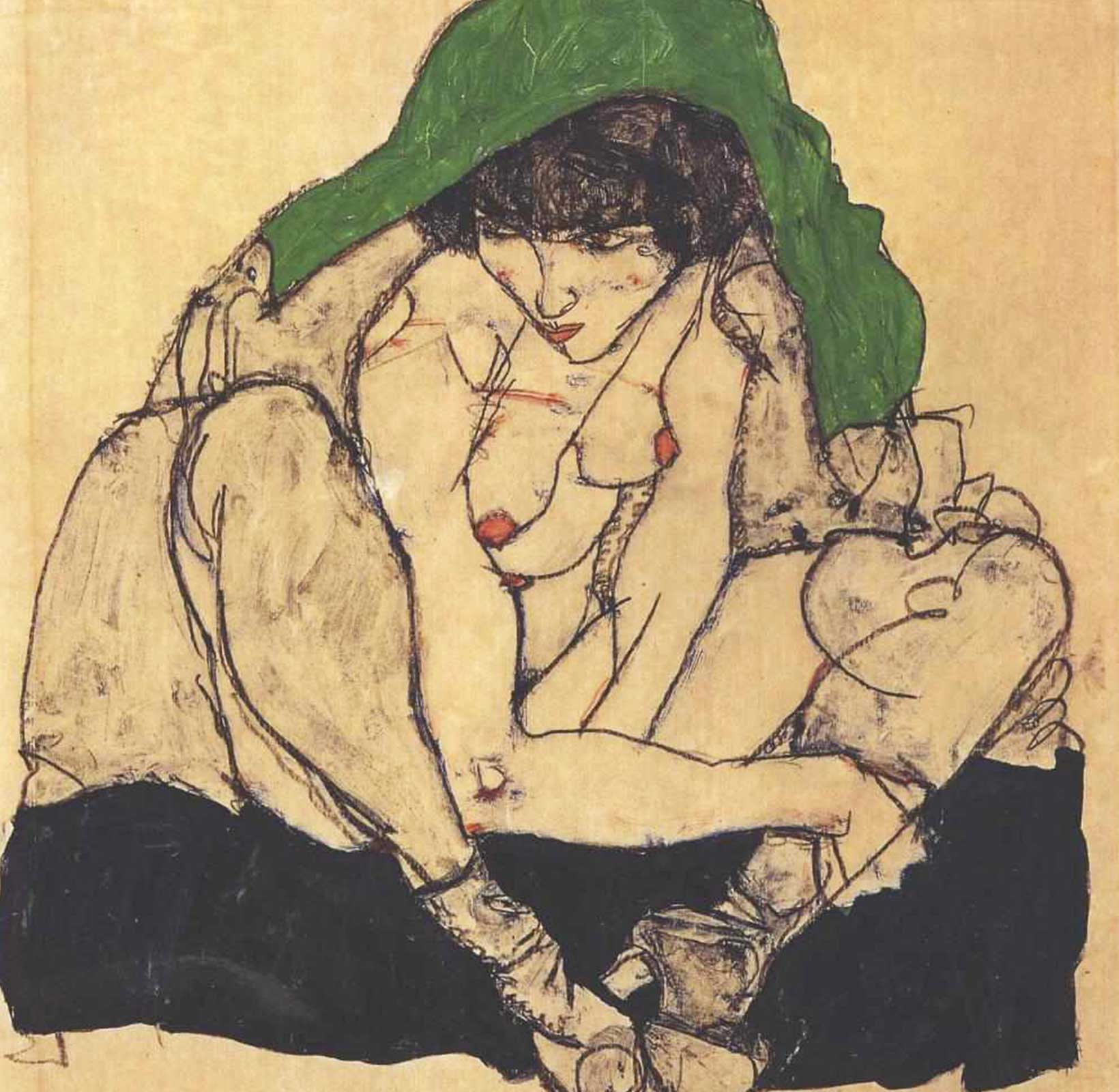
    Take a drawing by Egon Schiele.

    At first glance, you may not like it at all.

    Perhaps the figure feels too raw. Too angular. Too exposed. Too psychologically unsettled. Perhaps the nude does not align with your personal idea of beauty. Perhaps it resists erotic fantasy rather than inviting it. Perhaps the line work feels harsh instead of graceful.

    None of that means the work has failed.

    And none of it means your reaction is wrong.

    Erotic art, in particular, exposes how complicated our responses to the body really are. We are often taught to believe that a nude should be beautiful in a pleasing way, sensual in an obvious way, or desirable in a familiar way. But art is under no obligation to flatter our preferences.

    A nude can be vulnerable without being seductive.

    It can be tense rather than soft.

    It can be psychologically charged rather than erotically inviting.

    It can be difficult, awkward, confrontational, or unresolved—and still be deeply compelling.

    This is where many viewers confuse personal desire with artistic value.

    A work does not need to mirror your private fantasies to deserve your attention.

    Appreciation and Attraction Are Not the Same Thing

    This is especially important when looking at erotic or nude art.

    A nude does not need to produce arousal in order to succeed as a work of art. In fact, some of the most powerful nude studies do the opposite. They challenge idealized beauty, complicate desire, or expose the body as something more fragile, strange, symbolic, or psychologically loaded than a simple object of attraction.

    You can appreciate the structure of a figure without wanting it.

    You can admire the honesty of a body without eroticizing it.

    You can recognize the force of a work without calling it beautiful in any conventional sense.

    This is where mature looking separates itself from passive consumption.

    And this is precisely why erotic art is often so revealing: it does not simply show the body. It shows the viewer what they bring to the body.

    Art Is Meant to Be Experienced, Not Performed

    One of the quietest losses in the presence of art is pleasure.

    Not necessarily pleasure in the sensual sense, though sometimes that too. But pleasure in the broader sense: curiosity, fascination, surprise, tension, delight, shock, emotional recognition, visual seduction, even the pleasure of discomfort.

    When a critic hovers over your shoulder—literally or psychologically—that pleasure often disappears.

    You begin monitoring yourself.

    You become careful.

    You worry whether your reaction is intelligent enough, informed enough, subtle enough, correct enough.

    And suddenly, the work is no longer alive.

    You are no longer encountering art.

    You are managing your own performance in front of it.

    That is not looking.

    That is social anxiety disguised as cultural literacy.

    The Freedom of Looking for Yourself

    To be your own art critic does not mean rejecting all context, history, or informed interpretation.

    It means refusing to surrender your first response.

    It means understanding that expertise can enrich vision, but it should never replace it.

    It means knowing that taste is not something handed down from above by a nervous man in a scarf speaking in abstractions.

    It is something developed through attention, honesty, curiosity, and repeated encounters with the unfamiliar.

    The more you trust your own eye, the stronger your taste becomes.

    The more you look without fear, the more nuanced your reactions become.

    And the more you allow art to disturb, seduce, confuse, provoke, or resist you, the more alive your relationship with it becomes.

    Final Thoughts

    You do, in fact, know what you like.

    That is not something to apologize for.

    The real challenge is not whether your taste is valid. The real challenge is whether you are willing to look closely enough to understand why you respond the way you do.

    That is where art becomes personal.

    That is where taste becomes intelligent.

    And that is where the critic loses some of their power.

    Look first.

    Feel first.

    Think after.

    If the work still lingers in your mind—if it unsettles you, seduces you, confuses you, or keeps returning long after you have walked away—then it has already done something real.

    No permission required.

  • Is Limited Edition Art Worth It?

    There is a certain kind of allure that comes with owning limited-edition art. Not simply because it is rarer. Not simply because it may become more valuable over time. And not simply because fewer people...

    There is a certain kind of allure that comes with owning limited-edition art.

    Not simply because it is rarer. Not simply because it may become more valuable over time. And not simply because fewer people will ever own the same piece.

    The deeper appeal is psychological.

    To collect limited edition art is to choose something with boundaries. Something deliberately finite. Something not designed for endless replication or casual consumption. In a culture built on infinite scrolling, instant access, and mass production, that kind of scarcity carries real weight.

    And yet, many people still ask the obvious question:

    Is limited edition art really worth it when mass-produced prints are so much cheaper?

    The answer depends on what you want art to do in your life.

    If you are simply filling a blank wall, inexpensive decor may be enough. But if you are looking for something with presence, intention, quality, and long-term value, limited edition fine art offers something mass-produced art simply cannot.

    Here is why.

    Limited Edition Art Offers More Than Decoration

    Mass-produced wall art serves a purpose.

    It can be attractive. It can fill space. It can echo a trend or complete a room. There is nothing inherently wrong with that.

    But limited edition art is not just décor.

    It carries a different kind of energy.

    A limited edition print is created within a defined run—often signed, numbered, and produced in a fixed quantity. That means there is a known limit to how many will ever exist. Once the edition is sold out, that is the end of it.

    That boundary changes the relationship between the work and the collector.

    You are no longer buying something designed for endless reproduction. You are buying into a controlled release of an artwork that retains scarcity, intention, and collectibility. That difference may seem subtle at first, but it changes how a piece is valued, how it is perceived, and often how it is cared for.

    Scarcity creates significance.

    And significance changes the way we live with art.

    Limited Edition Art Can Be a More Meaningful Investment

    Art is unlike most other investments because it can be lived with.

    Stocks may grow quietly in the background. Real estate can appreciate over time, but it comes with ongoing expenses, maintenance, and market volatility. Art, by contrast, offers immediate enjoyment while still holding the potential for long-term value.

    You do not need to renovate it.

    You do not need to manage tenants.

    You do not need to wait for a quarterly report to feel its presence.

    You simply live with it.

    That is part of what makes limited edition fine art so compelling. It occupies a rare space between emotional value and financial potential.

    Of course, not every print will dramatically appreciate, and art should never be treated as a guaranteed financial instrument. Still, limited editions do have structural advantages over open-edition or mass-produced work.

    Why?

    Because scarcity matters.

    When an artist’s profile rises—through exhibitions, media attention, gallery representation, publications, or broader collector demand—early limited edition prints can become far more desirable. This is especially true when collectors buy from emerging artists before the wider market catches up.

    That does not make limited edition art a purely financial play.

    It makes it a more intelligent form of collecting.

    Emerging Artists Can Offer the Most Interesting Opportunity

    Some of the most exciting limited edition purchases happen before the artist becomes widely known.

    Buying work from emerging artists can be especially rewarding because it allows collectors to acquire strong pieces at more accessible price points while the artist is still building momentum. If that artist’s reputation grows, the perceived and market value of earlier editions often grows with it.

    But beyond the investment angle, there is something more compelling at work.

    You become part of that artist’s story.

    You collect before the consensus forms.

    You trust your own eye before the market confirms it.

    That is one of the most satisfying forms of collecting there is.

    It is not about buying what everyone already agrees is valuable. It is about recognizing quality, emotional force, originality, or visual power early—before the rest of the room catches up.

    That is not just collecting.

    That is taste.

    Quality Matters More Than Most Buyers Realize

    One of the biggest differences between limited edition fine art and mass-produced prints is not just rarity.

    It is quality.

    In the digital era, it has never been easier to produce and sell images. Print-on-demand platforms have made art more accessible, which can be a positive thing in many ways. However, accessibility does not always translate into craftsmanship.

    A mass-produced print may look acceptable online or in a small preview, but the difference often becomes obvious in person.

    The paper stock matters.

    The ink matters.

    The tonal depth matters.

    The sharpness matters.

    The texture matters.

    The way blacks hold, the way skin tones translate, the way highlights breathe, the way the surface catches light—these details are not minor. They shape the entire experience of the work.

    A strong limited edition print is usually produced with greater care, better materials, and more attention to fidelity. Whether printed on museum-grade paper, fine art rag, or premium canvas, the result tends to feel more substantial, more refined, and more lasting.

    You are not just buying an image.

    You are buying an object.

    And objects matter.

    Limited Distribution Creates Real Allure

    There is a reason scarcity has always been linked to desire.

    What is difficult to access often carries greater emotional charge.

    Limited edition art benefits from that same principle. When only a select number of prints exist, each piece naturally holds more weight. The work feels less disposable. It carries a stronger sense of ownership. It also tends to feel more personal because it is not something you are likely to see repeated endlessly in other homes, offices, boutique hotels, or social feeds.

    That matters more than people admit.

    Art is deeply tied to identity.

    The work you choose says something about how you see the world. It reflects your taste, your interests, your appetite for risk, your attraction to beauty, your comfort with tension, and the kind of atmosphere you want to live inside.

    Mass-produced art can be pleasant.

    Limited edition art can feel chosen.

    And that difference is often what gives a collection its magnetism.

    Limited Edition Art Makes a Stronger Statement in a Space

    A well-chosen limited edition print does more than fill a wall.

    It anchors a room.

    It creates atmosphere.

    It becomes a conversation piece—not because it is expensive, but because it feels less generic. People respond differently to work that feels intentional, unusual, or hard to place. Familiarity is comforting, but rarity is compelling.

    That is especially true with provocative, sensual, or psychologically charged work.

    A striking nude. A suggestive composition. A piece that sits somewhere between beauty and discomfort. A print that reveals restraint rather than excess. These kinds of works do not behave like decorative accessories. They shape the emotional temperature of a room.

    They create tension.

    They create intrigue.

    They create memory.

    That is the power of art that is collected rather than merely purchased.

    Buying Limited Edition Art Supports the Artist in a More Meaningful Way

    Buying art is one of the most direct ways to support artists.

    But buying limited edition work can be especially meaningful because it supports not only the sale itself, but the artist’s broader growth. Strong limited edition releases help artists build collector confidence, strengthen their market presence, and establish momentum around their work.

    Sales can lead to more visibility.

    More visibility can lead to exhibitions, press, features, reviews, commissions, and new opportunities.

    In other words, when you collect a limited edition print, you are not just purchasing an artwork.

    You are participating in the ecosystem that helps an artist build value.

    That benefits the artist.

    And over time, it can also benefit the collector.

    This is one of the most elegant aspects of collecting: the relationship between artist and collector is not purely transactional. It is part patronage, part trust, part cultural participation.

    You are not just buying something beautiful.

    You are helping shape what gets seen.

    Mass-Produced Art Has Its Place—But It Is Not the Same Thing

    To be clear, not every buyer needs limited edition art.

    If your goal is affordability, flexibility, or casual styling, mass-produced prints may be perfectly fine. There is no need to pretend otherwise.

    But it is important not to confuse accessible décor with collectible art.

    They may both hang on a wall.

    They do not serve the same purpose.

    Mass-produced art is built for volume.

    Limited edition art is built for distinction.

    One is easily replaced.

    The other becomes harder to replicate, harder to source, and often harder to forget.

    That difference is exactly why collectors continue to seek out limited editions even in an era where nearly any image can be printed on demand.

    Final Thoughts

    Limited edition art is not for everyone.

    And that is precisely part of its appeal.

    It asks a little more from the buyer: more intention, more discernment, more patience, more trust in your own taste. It is not simply about owning something expensive or exclusive. It is about choosing art that carries greater presence, stronger craftsmanship, meaningful scarcity, and the possibility of long-term value.

    In a world saturated with images, repetition, and endless reproduction, there is still something powerful about owning a work that remains deliberately limited.

    Something fewer people can have.

    Something chosen, not mass distributed.

    Something that feels less like décor and more like a decision.

    That is often where collecting begins.

    And once it does, it becomes very difficult to go back.

  • Artory logo

    Blockchain In The Art Market Powered By Artory

    Art Provocateur Gallery (APG) is excited to announce its partnership with Artory, a leading art registry and secure database for artworks and objects, that utilizes blockchain technology for the art...

    Art Provocateur Gallery (APG) is excited to announce its partnership with Artory, a leading art registry and secure database for artworks and objects, that utilizes blockchain technology for the art market.

    What is blockchain technology?

    Blockchain technology is a digital database that exists on multiple computers at the same time. A chain starts with the addition of new records of information or blocks. Each block created has a unique timestamp and then links to any previous block, which then forms the chain. Then through cryptography, the writing, and solving of codes, the blocks are linked together. By using cryptography, which provides secrecy and integrity to data, both authentication and anonymity of communications are guaranteed. This is the same type of code used in cryptocurrency or digital assets such as bitcoin.

    Blockchain in the art market

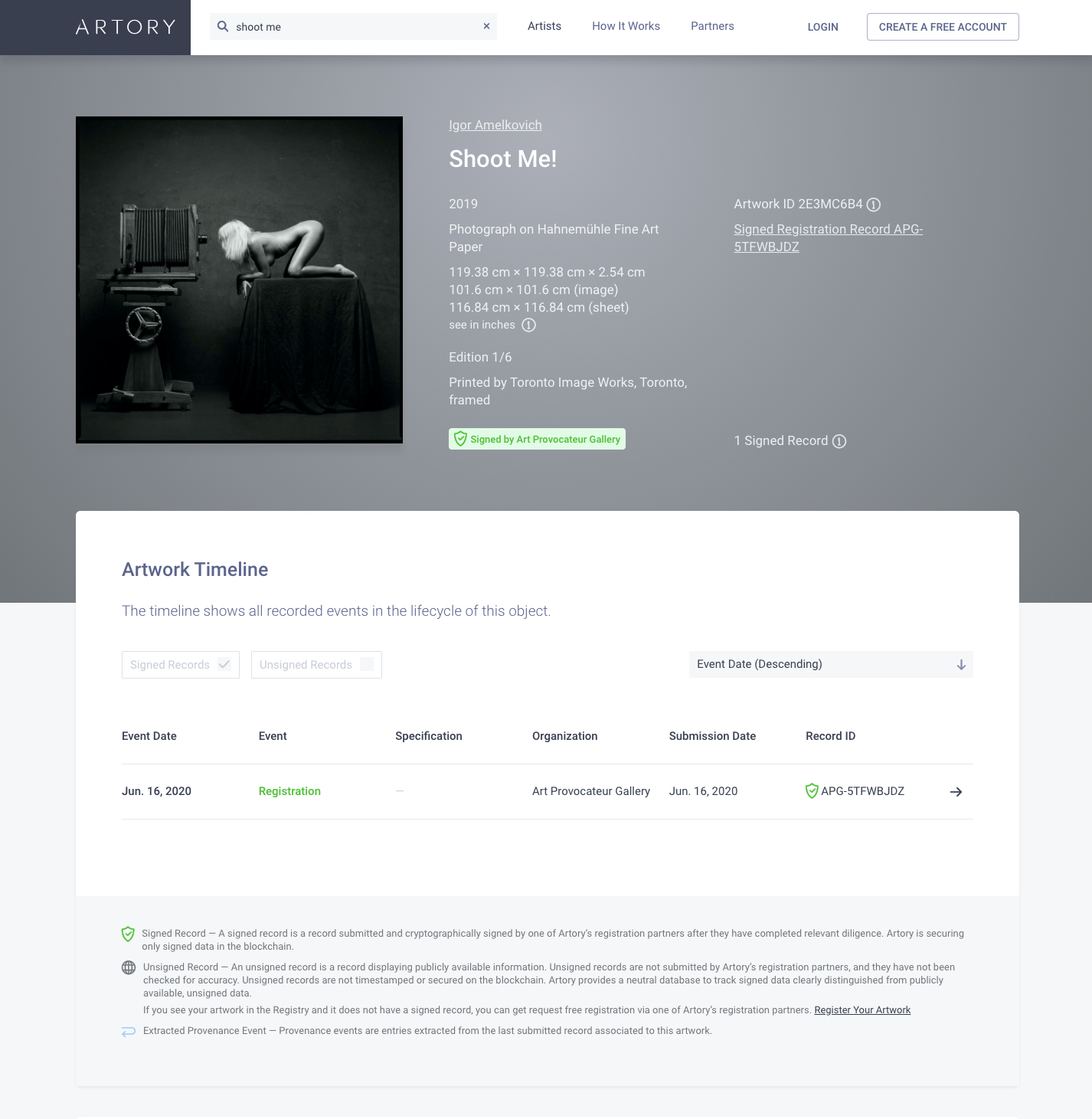
    Blockchain in the art market helps broaden possibilities. Galleries can verify artworks with issued registration records and unique cryptographic signatures. Furthermore, blockchain technology in the art market creates public reports of provenance and provides a safe digital infrastructure.

    Blockchain registered art powered by Artory Blockchain registration, offered by Artory certifies artworks with a sixty-four character alpha-numeric unique identifier. This identifier called a hash, is then registered to the blockchain. When someone buys an artwork through APG, they now own the digital certificate, the hash, for the artwork. Furthermore, their names will appear anonymously on the certificate of sale. When the work changes ownership, the new owner is then digitally registered, and the provenance tracked. By keeping track of the provenance, the value of an artwork can increase.

    Emergence P4510
    Emergence by RMF

    The access to encrypted blockchain technology offered by Artory is greatly beneficial to the art world. Using blockchain not only ensures the protection of art but also increases the prosperity and pleasure for those who buy, own, or sell art. By using blockchain technology, trusted art and cultural institutions and other experts such as galleries, auction houses, and museums can securely register artworks. They can keep a record of what sales, exhibits, any appraisals, or even catalog inspections done on behalf of their patrons and clients and provide them with reliable certificates.

    Blockchain technology protects both artworks and institutions. By partnering with Artory, Art Provocateur Gallery can engage with verified collectors and have exclusive rights to connect with them confidently. Not only that, but Artory allows institutions to be a voice of authority and education in art. Furthermore, some of the advantages of using blockchain in the art world include provenance tracking, increased value over time, theft prevention, and avoiding illegal duplication or production of fakes.

    APG blockchain via Artory

    Art Provocateur Gallery is now offering blockchain-secured digital certificates of registration for APG represented artists and artwork. This means that all artwork sold is registered to the blockchain, giving it a digital certificate of registration, digitally signed by the artist. When an artist signs the digital certificate, they are approving the sale and verifying the authenticity of the artwork. Additionally, Artory provides a digitally signed and blockchain-secured Certificate of Registration for buyers accessible only through the private and decrypted Collector’s Vault.

    Blockchain via Artory
    Blockchain registered art powered by Artory

    Untitled by Alina LebedevaWith Art Provocateur Gallery now registering artwork to the blockchain through Artory, APG shares the benefits and services with the artists they represent and collector’s base. Not only that, but APG’s access to Artory’s public registry offers transparency and credibility. Any APG purchased artwork registered via Artory has its provenance freely available on the registry for all registered users to see. Additionally, buyers remain completely anonymous, but can still use their certificate as proof of ownership. Furthermore, registered artworks resold at auction or between collectors have their provenance tracked while still maintaining buyer anonymity. 

    Benefits for living artists

    Though primarily serving as a public registry, Artory’s services also greatly benefit living artists. Through the secure database, artists can claim ownership of their work and reduce forgery incidents with certificates of authenticity. A blockchain-secured digital certificate can serve as an artist’s signature when marked/printed on the artwork. Blockchain technology in the art market can also ensure that an artwork has the correct documentation in perpetuity. It is also the primary step to establishing a secure and legitimate provenance trail from the moment a work leaves an artist’s studio or foundation. Another benefit includes giving the artists the ease of tracking any future sales and simplifying royalty payments.

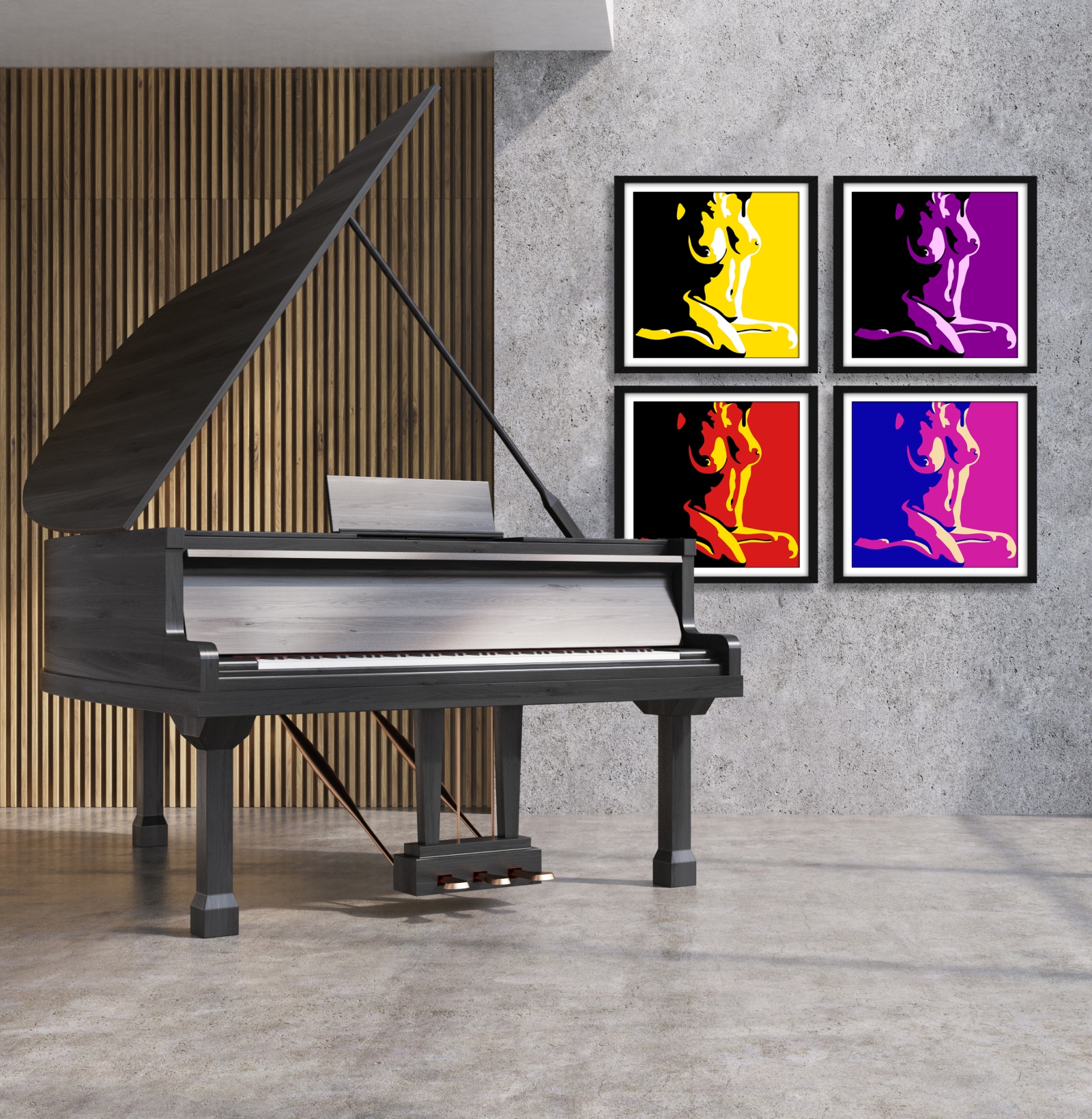
    Nude Art Sitting 5500 Series
    Nude Art Sitting Female by Julia Gogol

    Artists registered through verified partner institutions such as APG have access to benefits such as faster approval of sales, digital signature for works, and increased value over time. Artists’ inventories, sales, and productions registered to Artory through APG are managed by the gallery itself. Additionally, if APG is responsible for producing limited edition prints, the gallery takes care of printing or embossing each work with the digital certificate number (hash) that is registered to the blockchain.

    Benefits for collectors

    Another party benefited by APG’s and Artory’s partnership is the collectors of fine erotic art. The services offered by Artory allows collectors to register their artworks and receive digital signatures vetted by certified art institutions. Therefore, collectors from all over the world can confidently be part of the art community and have access to enhanced knowledge. Additionally, collectors have access to the registered provenance and object information uploaded to Artory’s public ledger. Advocating for a commitment to privacy and confidentiality.

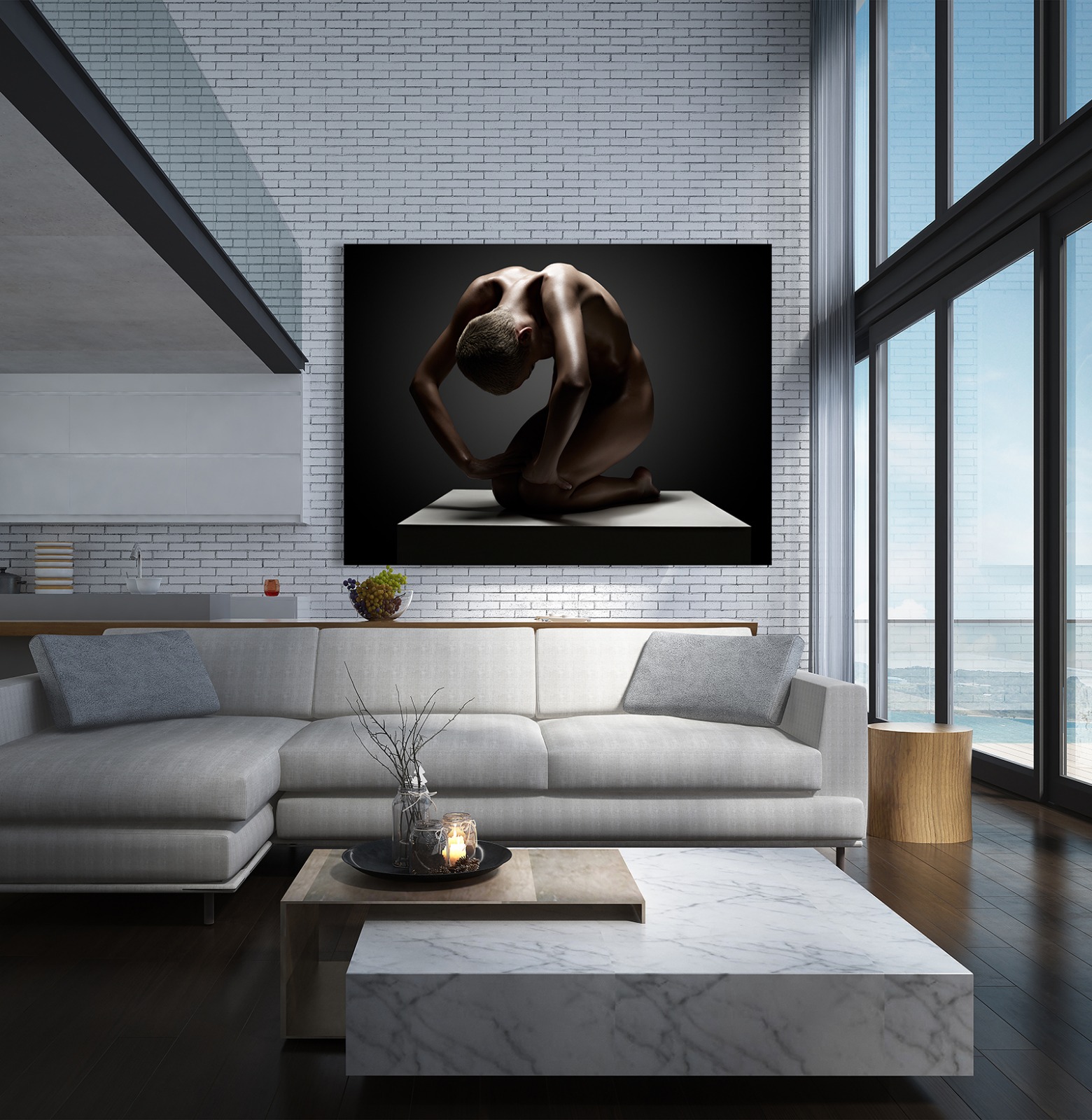
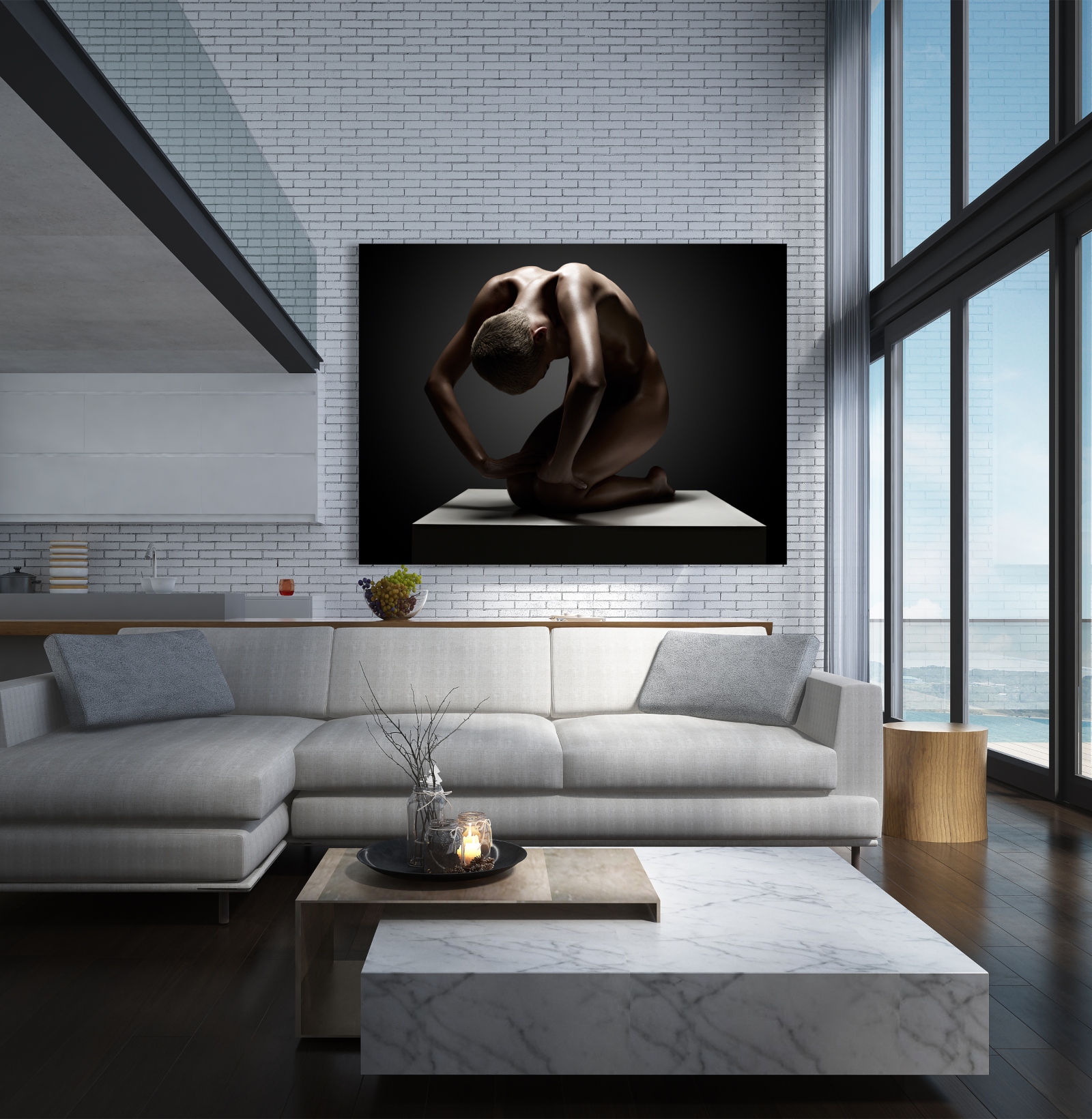
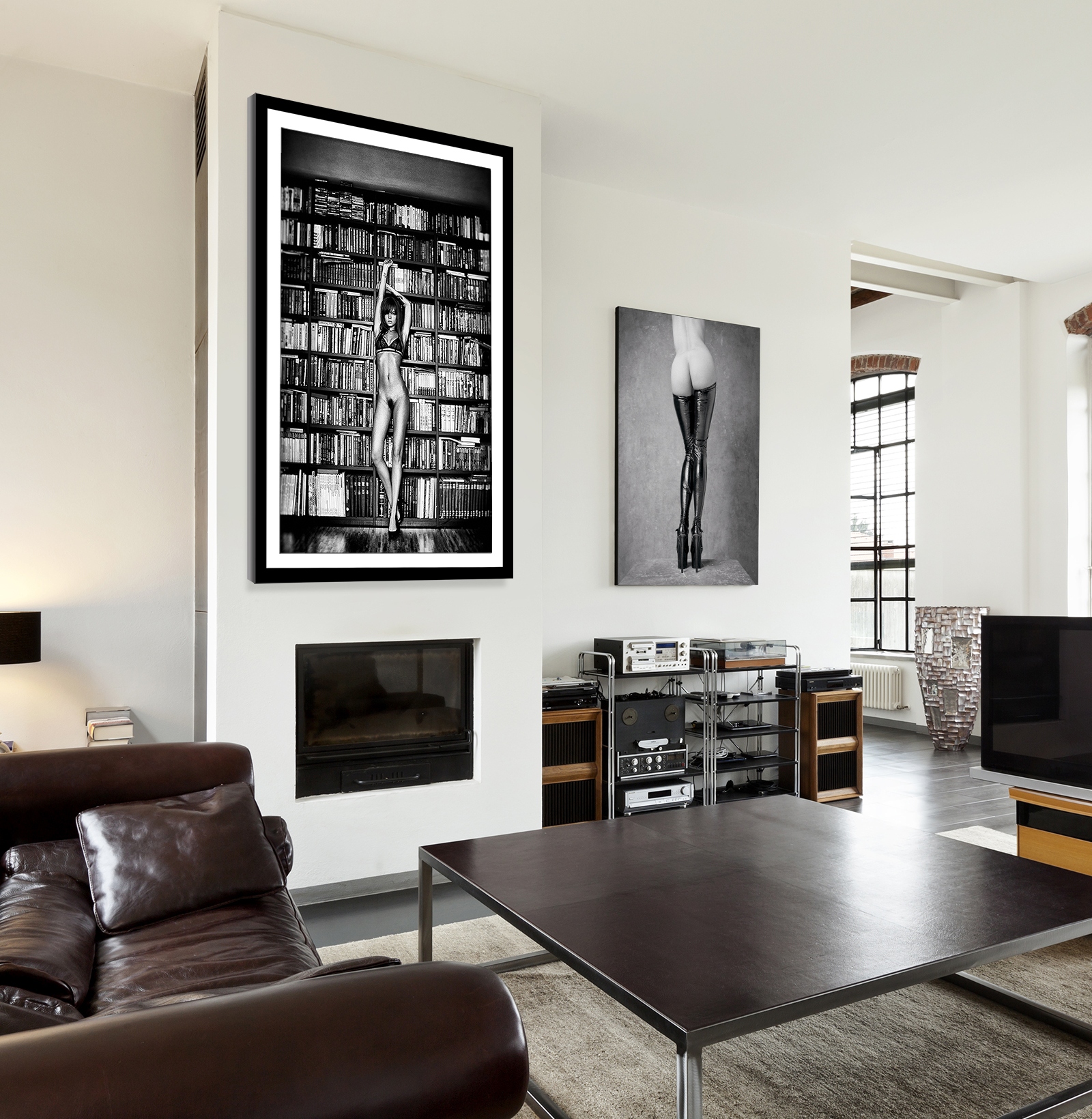
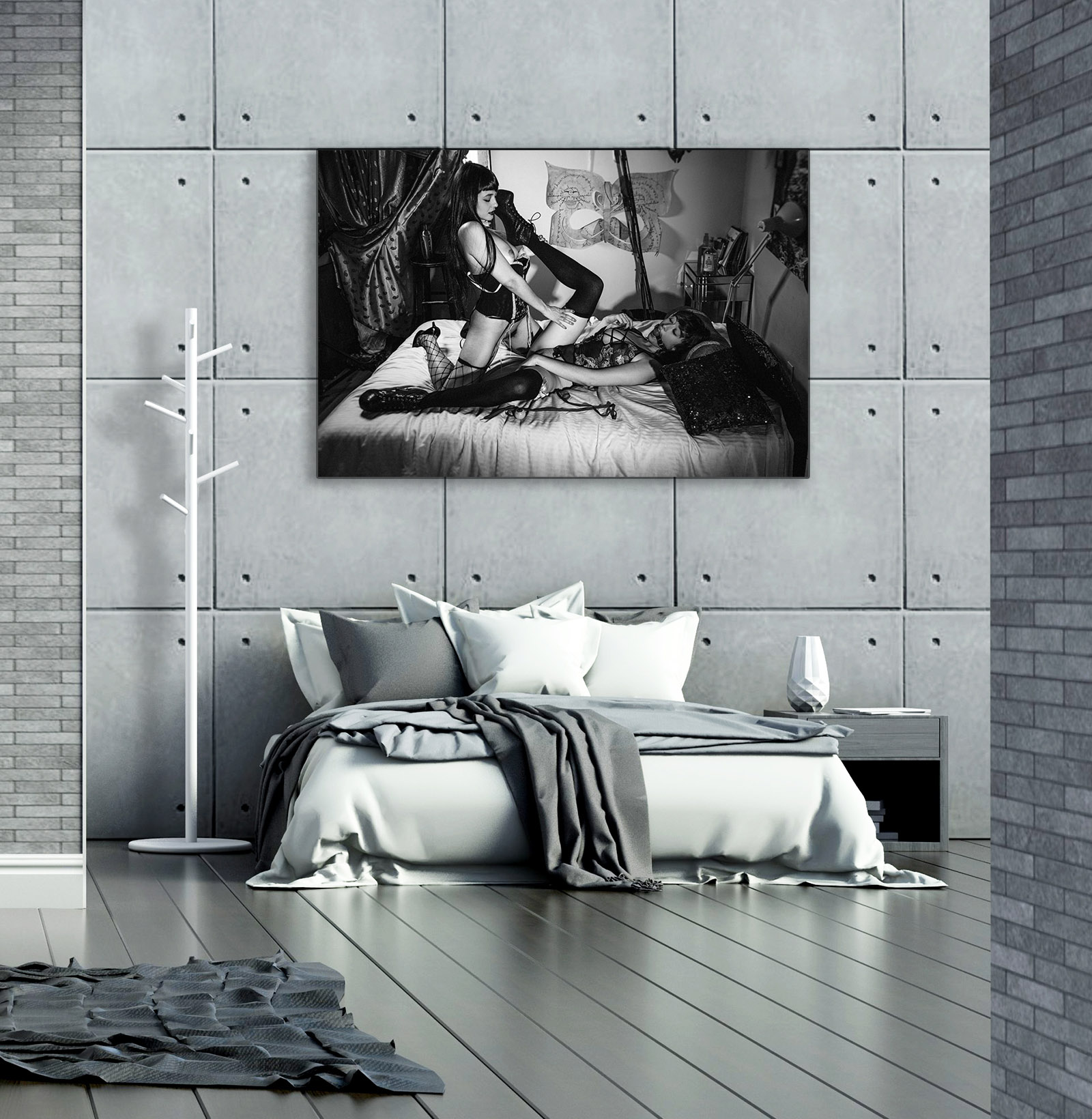
    Nude Art Living Room Loft P5024 P4999
    Untitled by Alina Lebedeva

    Artory’s partnership with Art Provocateur Gallery ensures that any sensitive information of an art sale is secured to the blockchain. Furthermore, Artory’s teams in New York, Berlin, and Bangkok establish the registry as a neutral and trusted resource for the useful purpose of blockchain technology in the art market.

  • Model with painting by arkadiy kozlovskiy

    Pornography or Erotic Art?

    Is erotic art pornography? While not a simple question to answer, addressing it is necessary in order to bring clarity, appreciation, and understanding of this topic by what at times can be considered an...

    Is erotic art pornography? While not a simple question to answer, addressing it is necessary in order to bring clarity, appreciation, and understanding of this topic by what at times can be considered an extremely sexualized society. We must ask: What is erotic art? What is pornography? What is the difference between them, and how can we develop a knowledgeable perspective on the issue?

    pornography or erotica by arkadiy kozlovskiy
    Arkadiy Kozlovskiy | Yulya Svet

    In order to understand the difference, we must first address the definition of each word. Art is defined by Webster’s dictionary as “something that is created with imagination and skill and that is beautiful or that expresses important ideas or feelings.” A work of art conveys a concept, an idea, or a group of ideas. It is communication between the artist and the viewer, listener, or reader. Within art and the viewing of it, there is no shame; at least, there shouldn’t be. Art inspires interest and deep thought, however, there is not usually a blatant push for action intended by the artist. For example, a work of tastefully erotic art can hang on a wall and be understood by artists and the individuals viewing it, that while sexy, the piece is not necessarily intended to motivate the viewer to engage in the eroticism being portrayed. At this point, one can begin to see the difference between art and pornography, once the purpose of erotic art is understood.

    Bruno Fournier 6709
    Photographer: Bruno Fournier

    We must next define the word pornography in order to understand its meaning as well. The word pornography originates from, “pornographos,” a Greek word that refers to prostitution. Webster’s defines pornography as “the depiction of erotic behavior (as in pictures or writing) intended to cause sexual excitement,” or, “the depiction of acts in a sensational manner so as to arouse a quick intense emotional reaction.” The motivation of pornography, then, is not the communication of a concept or idea. Its intention is for action on the part of the viewer, reader, or listener. Within pornography and normally, a consumer of pornography, there is generally a strong push for gratification of sorts.

    Within pornography, there is generally a strong push for gratification.

    There is not usually an inspiration for deep thoughts and consideration contained in the intention of pornography toward its consumers. For example, a sexual depiction as part of a marketing campaign may be considered pornographic, as it motivates action. The sexual depiction is not represented for contemplation, appreciation, or communication of an idea other than to motivate the viewer, listener, or reader to engage in what is being sold. Unfortunately, as a result of the pornography industry and the sexually saturated marketing campaigns so prominent today, there is a gross lack of understanding of the difference between erotic art and pornography.

    Tobias Ginski 7269
    Photographer: Tobias Ginski

    Let us not leave out the perspective that erotic art is a communication of beauty, while the purpose of pornography is not for the consumer to take the time to appreciate beauty and ideas. Tasteful art is about the artist, and what is being communicated by him or her. It is an invitation of the artist extended to the consumer to participate in his or her art via intellect. Pornography is about the viewer, listener, or reader, and what can be gained by him or her as a result of consuming it.

    Rick 7291
    Wildlife by Rick

    The understatement of tasteful art when comparing erotica and pornography is also to be appreciated. It evokes the thoughtful emotion of the consumer. The communication of art can be assessed, understood, and reassessed with appreciation. However, pornography is seldom understated and does not usually promote the consumer to take the time to assess or thoughtfully examine. The general motivation is clear, blatant and at times, forceful. This brings to the forefront the argument that what is considered pornographic does lie within the viewer. An artistic work that one individual may view as simply erotic, may cause that “strong emotional” and motivated reaction within a different person that may be considered pornographic.

    THEKEYTOROOM237 7113
    Photographer: THEKEYTOROOM237

    It is important for consumers of art to fully understand and continue to educate themselves on the difference between erotic art and pornography. It is a path of understanding and personal growth not to be regretted.

    Art Provocateur Gallery presents a beautifully curated collection of nude and erotic art from around the world. We welcome you to peruse erotic art for sale at ArtProvocateur.com.

  • One Of A Kind Erotica

    What Is Erotic Art

    Erotic art is often misunderstood. Scholars and artists alike can struggle to truly define erotic art. Most often they rely on explaining what erotic art isn’t, or on the idea of “you know it when you...

    Erotic art is often misunderstood. Scholars and artists alike can struggle to truly define erotic art. Most often they rely on explaining what erotic art isn’t, or on the idea of “you know it when you see it.”

    erotic art thomas donaldson
    Artist: Thomas Donaldson

    This lack of definition creates a challenge for the genre. We take a crack at an easy way to grasp definition.

    Definition of Erotic Art

    Erotic art is an art that either depicts sexual activity and/or is designed with the intent of provoking arousal. While it has erotic intentions, it is also something that can be appreciated as art if absent of arousal. It is fine art with erotic themes and/or imagery.

    Starf by Rick 7235
    Starf*** by Rick

    This definition separates erotic artists from pornographers. Void of arousal, pornography is not typically artistically driven.

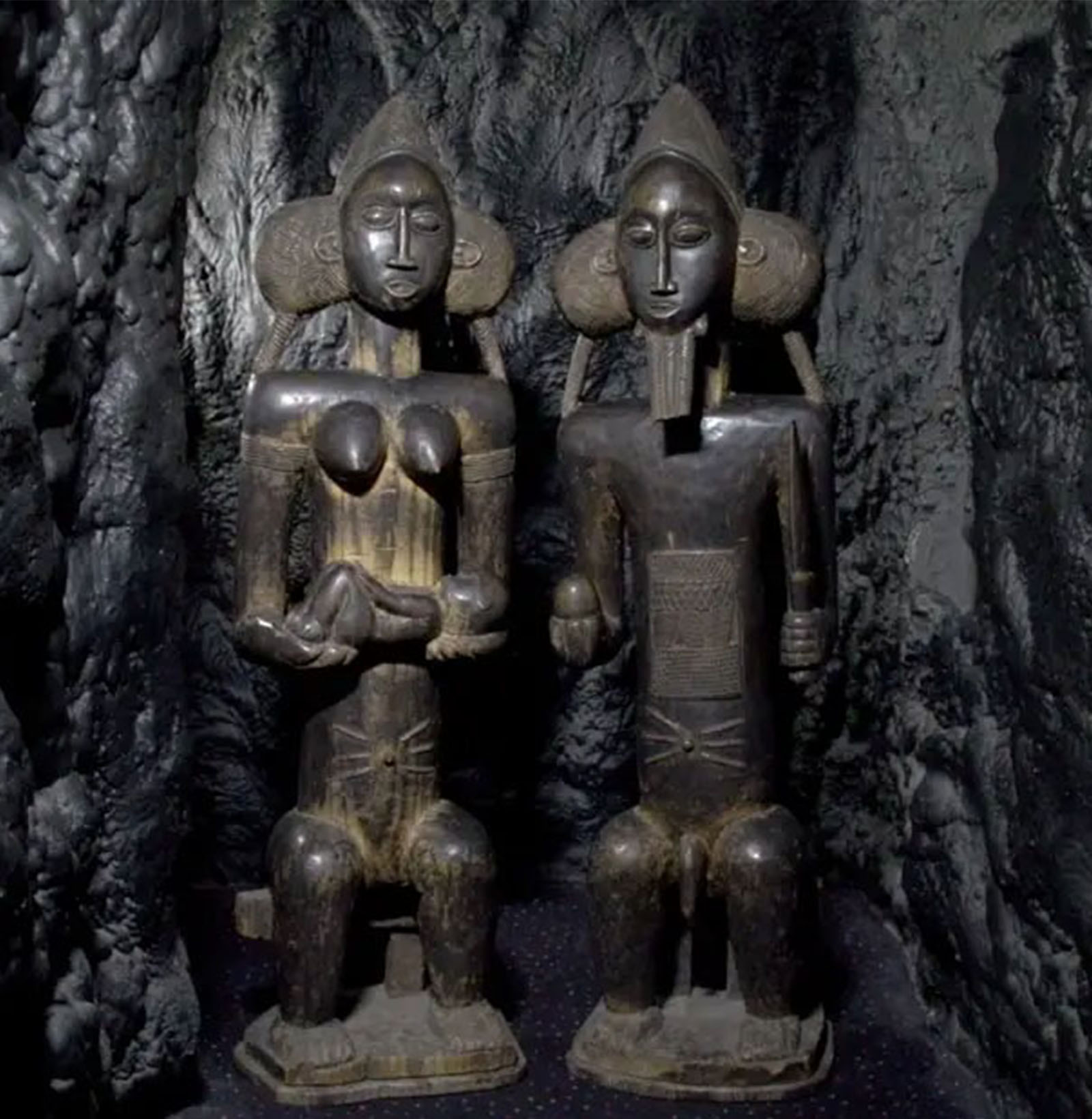
    As well, this definition avoids painting all sexual imagery as erotic art. For instance, the famous Baulé fertility statues depict a man and woman nude. Although they depict nudity, there is no erotic intent so they do not fall under the erotic art category.

    Instead, the purpose of these statues is to promote fertility. They’re actually a popular exhibit for couples who are trying to conceive. According to Ripley’s (who has the statues on display):

    Baule Statues
    Baulé Tribe | Fertility Statues

    “Thousands of women have testified that after trying to conceive for years. They got pregnant after laying their hands on the legendary statue’s.”

    These represent a clear example of the difference between nude and erotic sculptures.

    Why is Defining Erotic Art Important?

    All great art has its critics. But, erotica suffers criticisms and challenges that other genres aren’t as exposed to. One of the biggest reasons it is important to define erotic art is that a misrepresentation as pornography leads to its suppression.

    Silence by Nai Sirrom 6961
    Silence by Nai Sirrom

    Freedom of speech protects the arts. Pornography, however, is not privy to the same protections because of its classification as obscene.

    Art or Obscenity?

    In the famous Miller v. California 1973 trial, the courts established a three-factor rule that satisfies whether to legally categorize a piece as art or obscenity. Miller was arrested for selling, distributing, and publishing obscene materials. His defense: the works were not obscene because they possessed social value.

    Although his defense did not stand, the trial did lead to a standard for determining whether to classify something as art or obscenity. A piece must meet all three factors:

    Bodyscape Photography
    No Tilte No 7 | Yevgeniy Repiashenko
    1. * Whether the average person, applying contemporary community standards, would find that the works as a whole appeal to the prurient interest;
    2. * Whether the work depicts or describes sexual conduct or excretory functions, as defined by state law, in an offensive way; and
    3. * Whether the work as a whole lacks serious literary, artistic, political, or scientific value.

    With regards to the first two points, they are subjective depending on the time and locations. The third point, however, is really the crux of what separates art from obscenity. Erotic art contains serious artistic value.

    The Philosophy of Erotica

    The philosophy of erotic art goes beyond arousal. It has been a part of human culture since our earliest discovered records. Erotica is part of who we are, and its artwork is a means of embracing human nature.

    Is All Erotic Art Nude?

    As evidenced in famous paintings, like Michelangelo’s The Creation of Adam, not all nude art is erotic. But is all erotic art nude? This is a common misconception, but erotica does not rely on nudity.

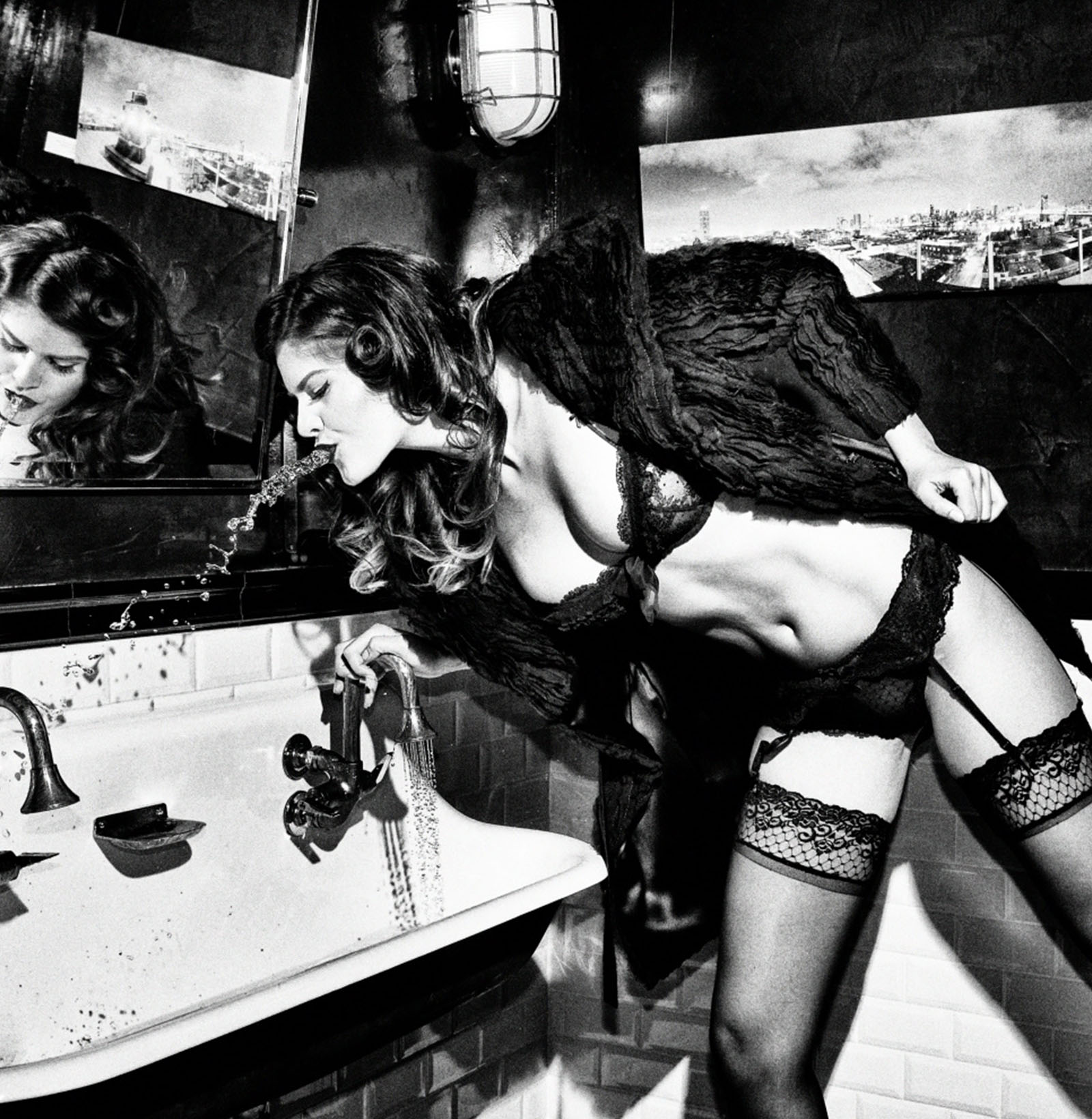
    Erotic themes, situations, or suggestions do not require nudity. In erotic photography, the model’s clothing and posing can drive the erogenous appeal. A good example is burlesque photography where the model’s attire is sexually suggestive.

    Fetish Photography
    Woman Spitting Water | Tenaglia

    Erotic artists may also focus on body parts that are commonly linked to sexual interaction and/or arousal. An artist may specifically focus on sexualized body parts like legs, breasts, genitalia, hands, and feet to evoke something in the viewer.

    Whether through incorporating a fetish or the implication of sexuality, erotic art does not require nudity.

    Where to Find Erotic Art

    Today, there is no shortage of ways to discover art. Galleries, shows, and social media provide easy access for long time collectors or first-time buyers. Erotic art, however, has remained more elusive. Art Provocateur Gallery is the premier online gallery for erotic art.  Browse the largest selection of erotic art from some of America’s best erotic photographers.

  • Woman with mouth covered by Marcel van der Vlugt

    Erotic Nude Art | Contemporary vs Abstract

    If you’re an erotic nude art enthusiast, you truly appreciate the form and sensuality of the human body. As an admirer, you may notice how the intricacies of the human figure transform with each...

    If you’re an erotic nude art enthusiast, you truly appreciate the form and sensuality of the human body. As an admirer, you may notice how the intricacies of the human figure transform with each different artistic style. Depending on whether the nude is a contemporary work or abstraction, the nature of the nude will adjust and change according to each style, manifesting itself differently to reflect the specific aesthetic approach.

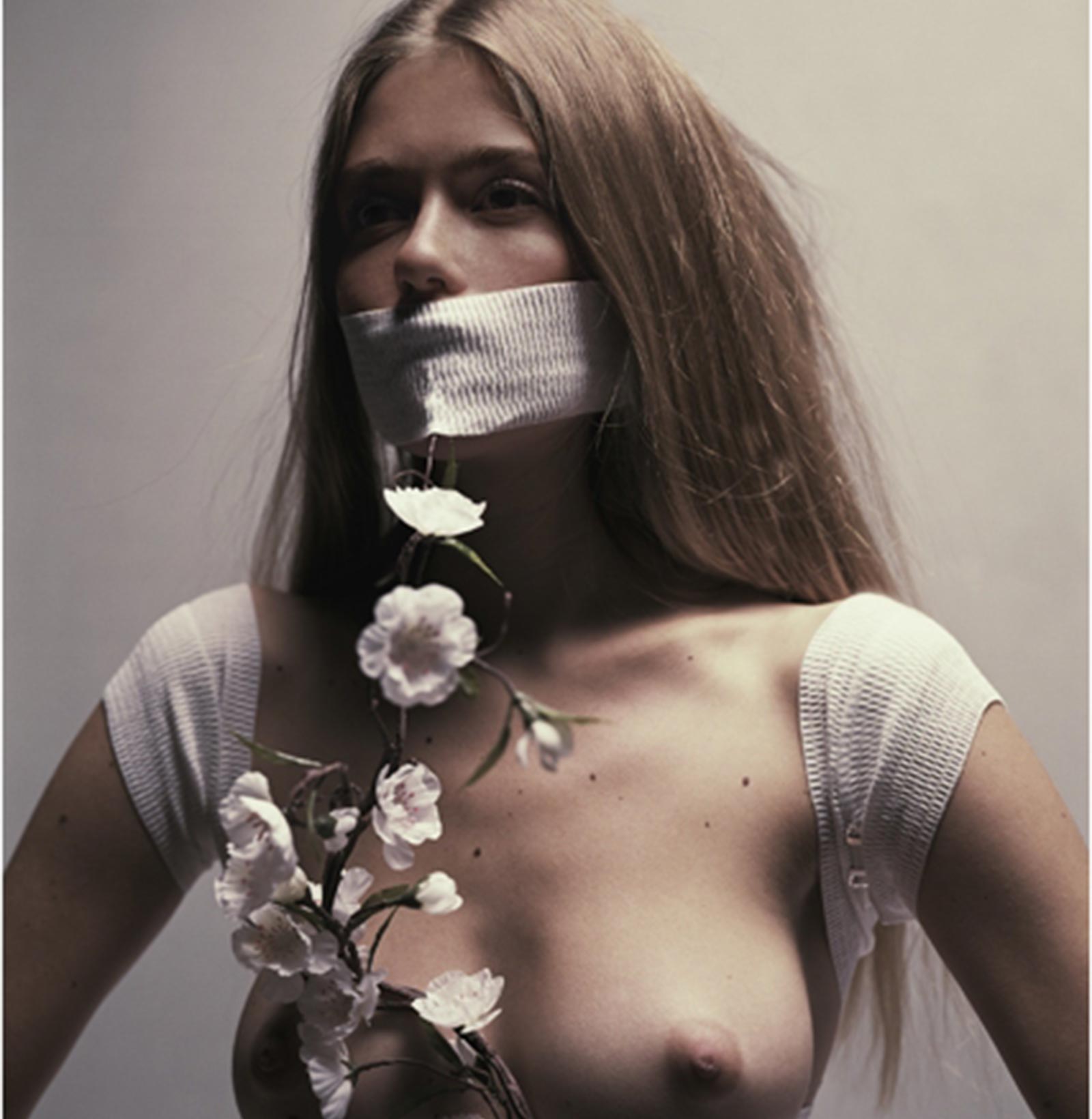
    Woman with mouth covered by Marcel van der Vlugt
    Marcel van der Vlugt | Woman (2001)

    With abstract eroticism, we are invited to experience the female form in a new way; the imagery and colors are often distorted for an enhanced perspective. Comparatively, the contemporary erotic nude offers us a real-world view of today’s women, while sometimes also offering a critical standpoint from which to perceive female identity.

    If you have not yet broadened your tastes within the erotic nude genre, you can consider embracing versions across different styles. It’s outstanding to see how the nude’s beauty is reinvented through various creative modes.

    An erotic nude’s beauty is reinvented through various creative modes.

    With the conceptual approach, the contemporary artist is representing a theoretical issue that addresses culture or politics in a critical way. In response, we are invited to explore a current-day problem affecting global society. Marcel Van Der Vlugt shows conceptualism in his work, inviting us to explore a deeply loaded social issue regarding western women. His photograph depicts a woman wearing a mouth cover while having her voluptuous breasts exposed.

    Alex Machev 6719
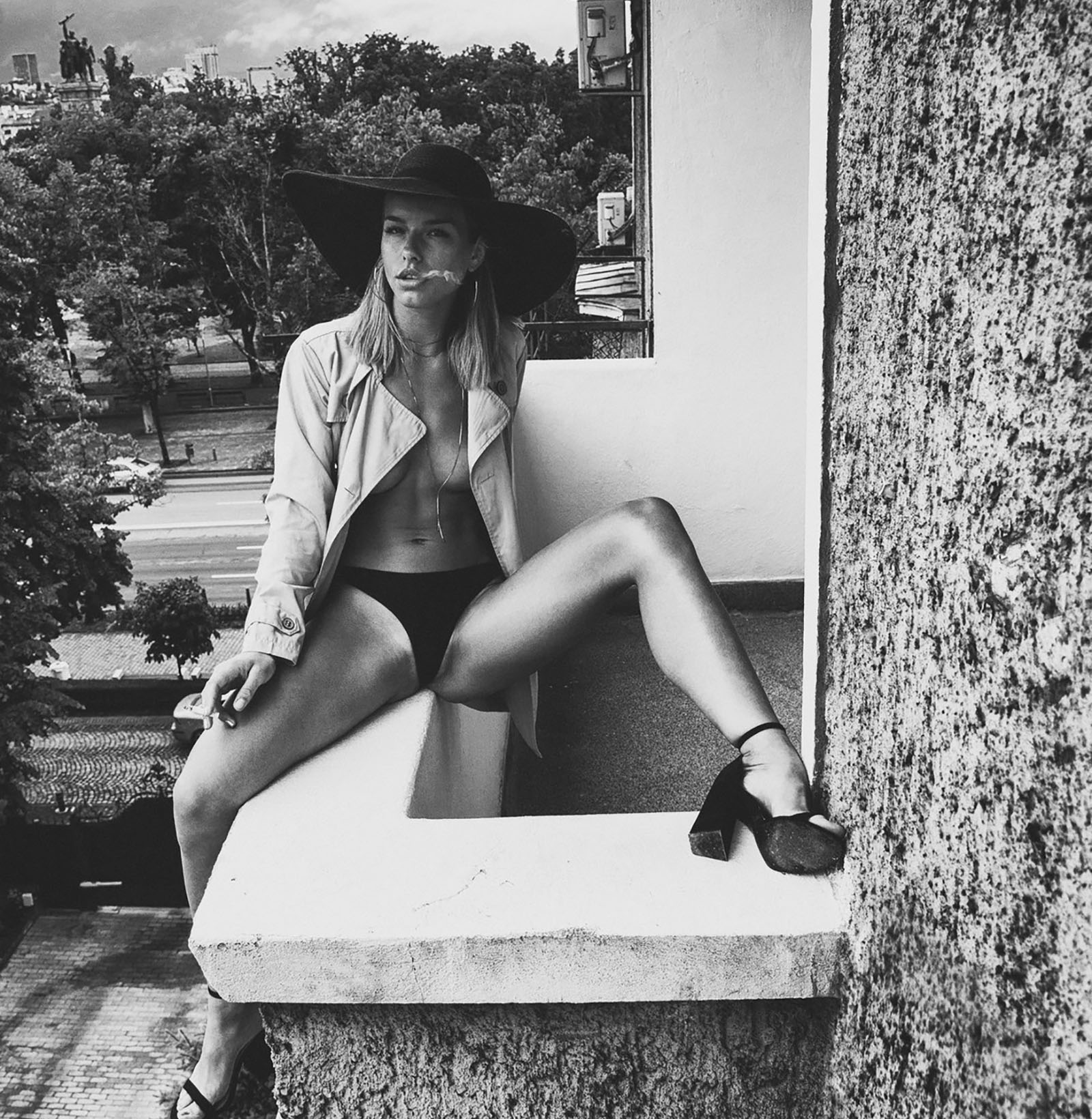
    Photographer: Alex Manchev

    There are many feminists and activists who feel such objectification is cruel and misogynistic. Nevertheless, the woman’s nudity is also equated with sublimity and purity through the white flowers, which evoke a quiet beauty. Overall, there is special mysticism and fantasy surrounding this scene.

    In the case of the contemporary erotic nude art, we are encouraged to approach the scene with a more critical eye as opposed to merely appreciating its aesthetic value. With the contemporary nude, the artist will often utilize the naked body for either of two objectives: documental or conceptual.

    With the documentary approach, the artist is depicting or exploiting today’s men or women to reflect the life and times in which they live. Alex Manchev reveals this contemporary theme through a realistic atmosphere. The woman’s made-up eyes and provocative pose and heels offer a provocative sex stereotype, displayed on an apartment balcony ledge while smoking a cigarette on a sunny day. These elements produce an overwhelming commonplace context, identifiable by the viewer, making it both arousing yet familiar.

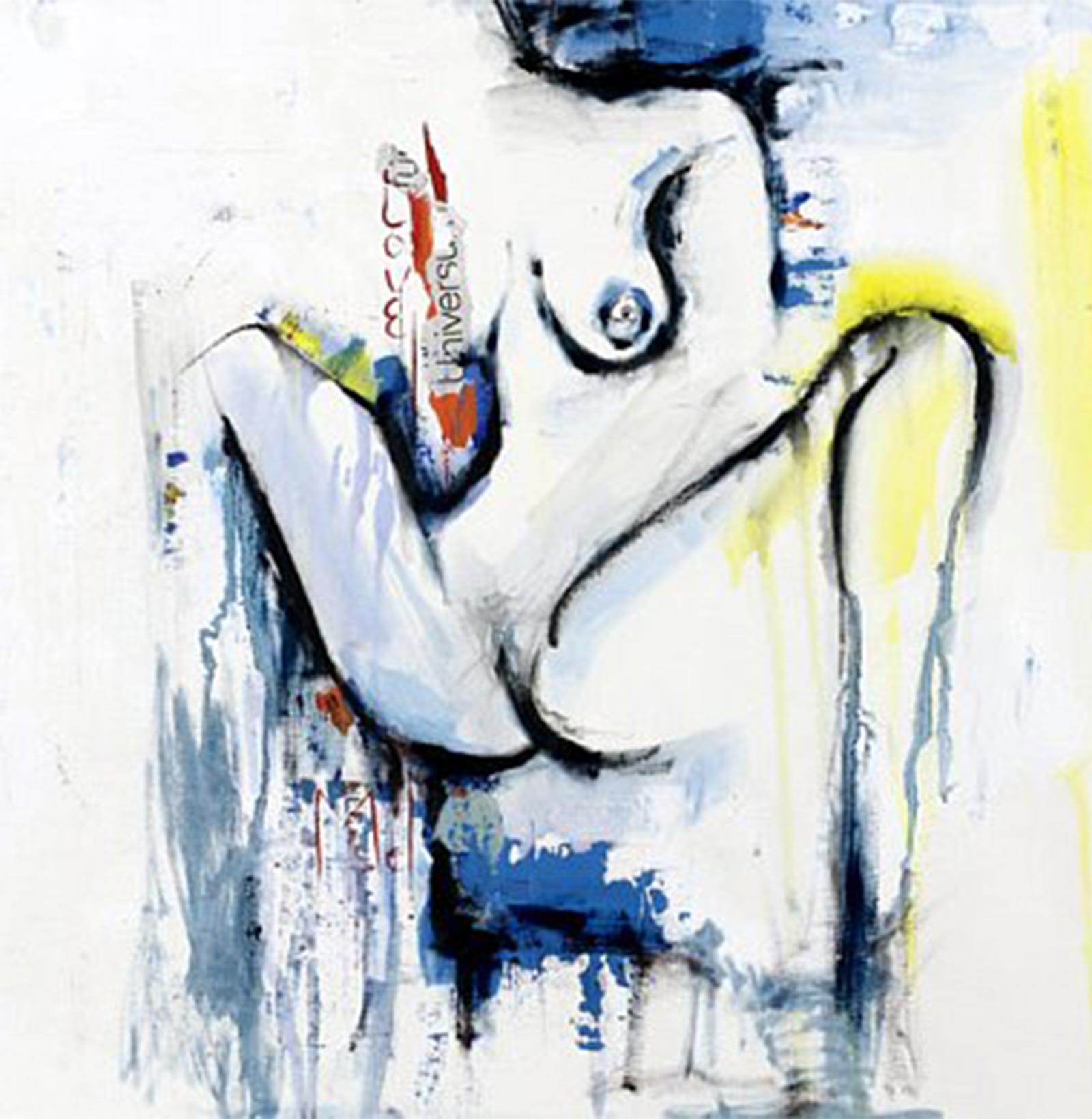
    'Love Me' painting by artist Renu G
    Renu G | Love Me (2009)

    With abstract eroticism, on the other hand, we are encouraged to appreciate human physicality in an entirely new light. The colors and forms are expressed purely through the artists’ unique vision. As a result, the imagery is often deeply rooted in personal taste, leaving the formal elements distorted and expressive.

    Erotic imagery is shown poignantly in Renu G’s work, Lust, where she focuses on the provocative nature of ‘line’. Although the artist only leaves subtle marks on the canvas, she provides just enough information to suggest strong sexual energy.

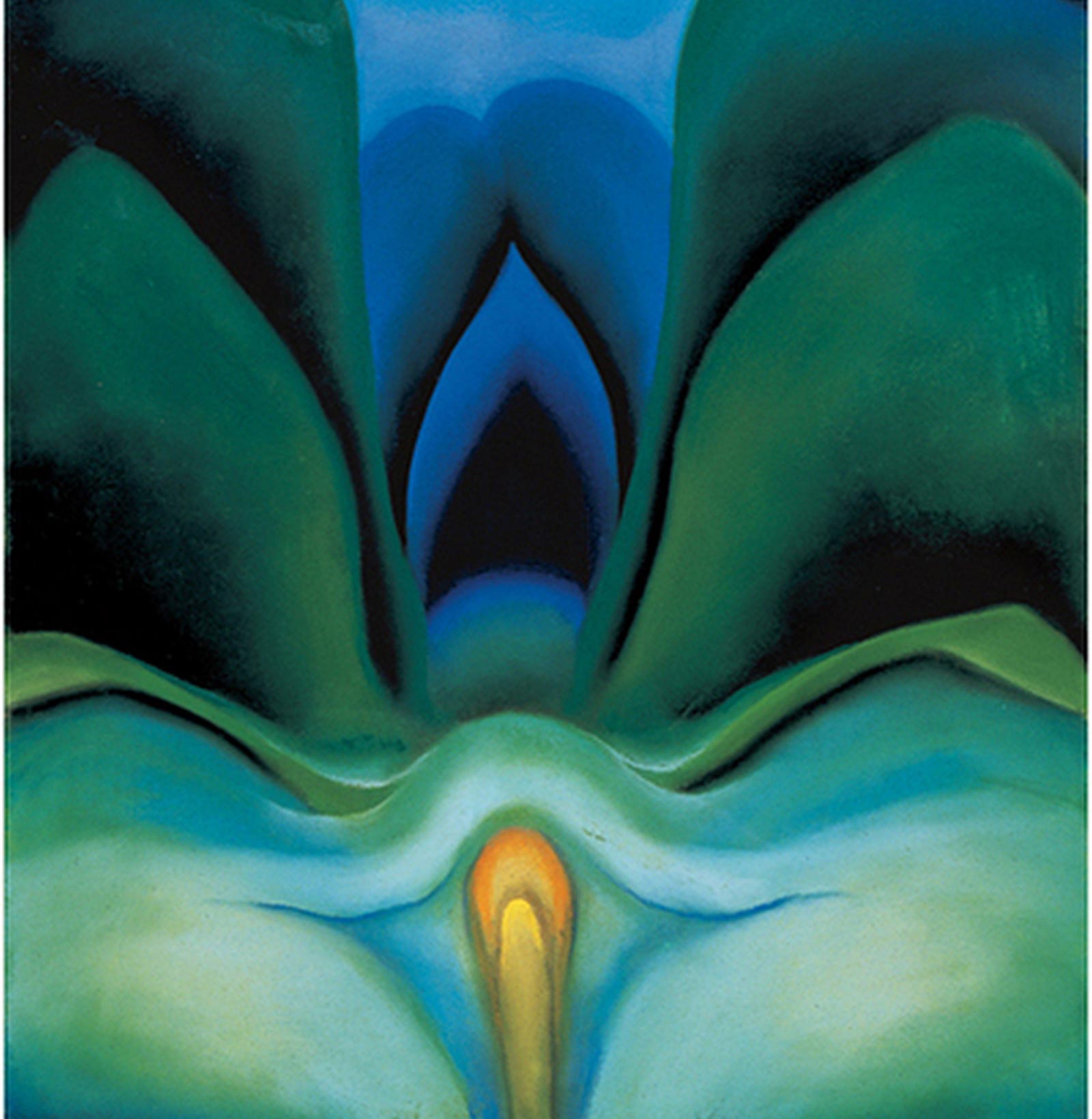
    Blue Flower painted by Georgia O’Keeffe in 1918
    Georgia O’Keeffe | Blue Flower (1918)

    Another superb example of erotic abstract art is the blue masterpiece “Flower” by Georgia O’Keeffe. While only subtly indicating the shape of a vagina, the artist gracefully appeals to our primal perceptions of the genitalia. The artist merely uses a variety of swift flower-like shapes, yet it’s still immediately identifiable and arousing.

    However, the use of blue makes this a compelling abstract work as this color is usually associated with coldness and distance. Conversely, the color red is often linked to passion and sensuality, making blue an interesting color choice for this particular piece. Nevertheless, this choice adds an odd sublimity and peacefulness that we do not often associate with the vagina, a symbol of empowerment and fertility. For this reason, the viewer can approach this work as an elegant expression of female eroticism.

    No matter which artistic style is being used to depict eroticism, there will almost always be a raw organic beauty in every piece. Whether the work is contemporary or abstract, you can appreciate the beauty and nature of nakedness in all its forms. Through each type of expression, the soul of nudity is celebrated through the artist’s unique lens, inviting you as the viewer to share the experience.

    Where to Find Erotic Nude Art

    Today, there is no shortage of ways to discover art. Galleries, shows, and social media provide easy access for long time collectors or first-time buyers. Erotic nude art, however, has remained more elusive. Art Provocateur Gallery is the premier online gallery for erotic art.  Browse the largest selection of erotic art from artists from all over the world.

  • Art-Provocateur-Gallery-5

    Pros and Cons of Social Media for Erotic Artists

    For emerging artists, social media platforms are becoming a necessity for building their name and their following. Instagram is an especially valuable platform for sharing art, connecting with fans, and...

    For emerging artists, social media platforms are becoming a necessity for building their name and their following. Instagram is an especially valuable platform for sharing art, connecting with fans, and promotion.

    Art-Provocateur-Gallery-5
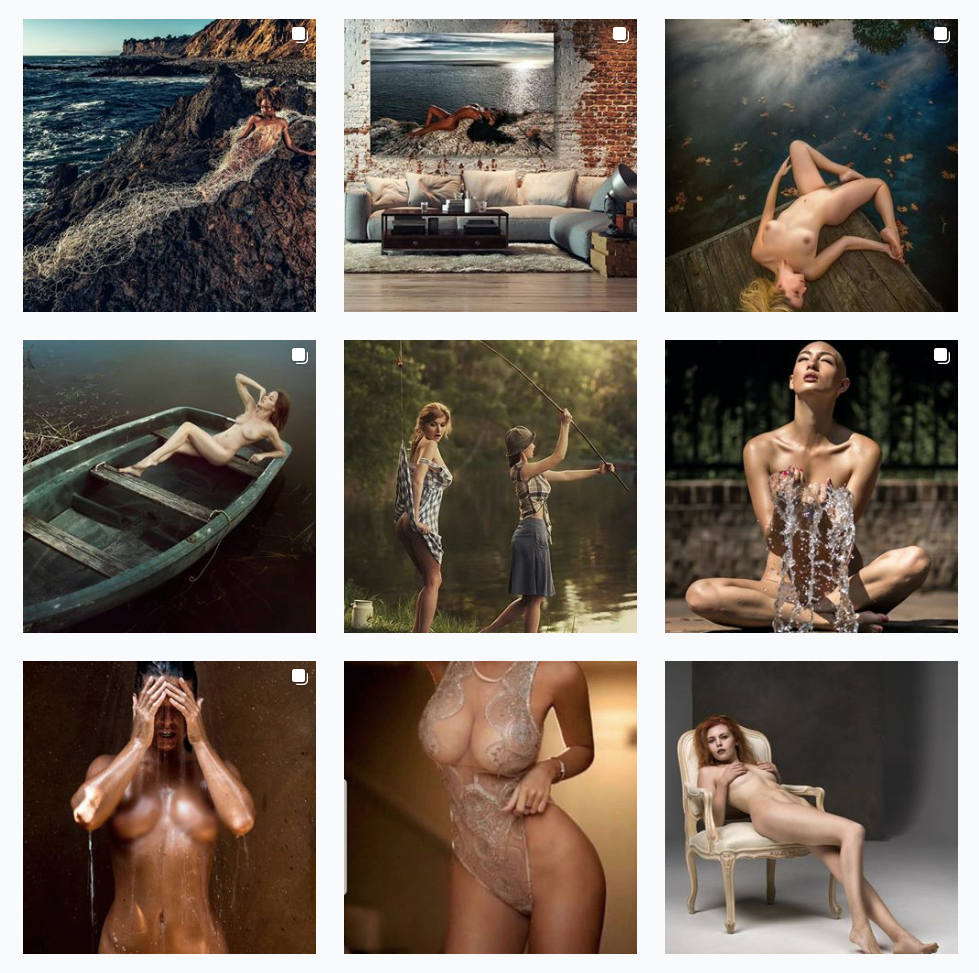
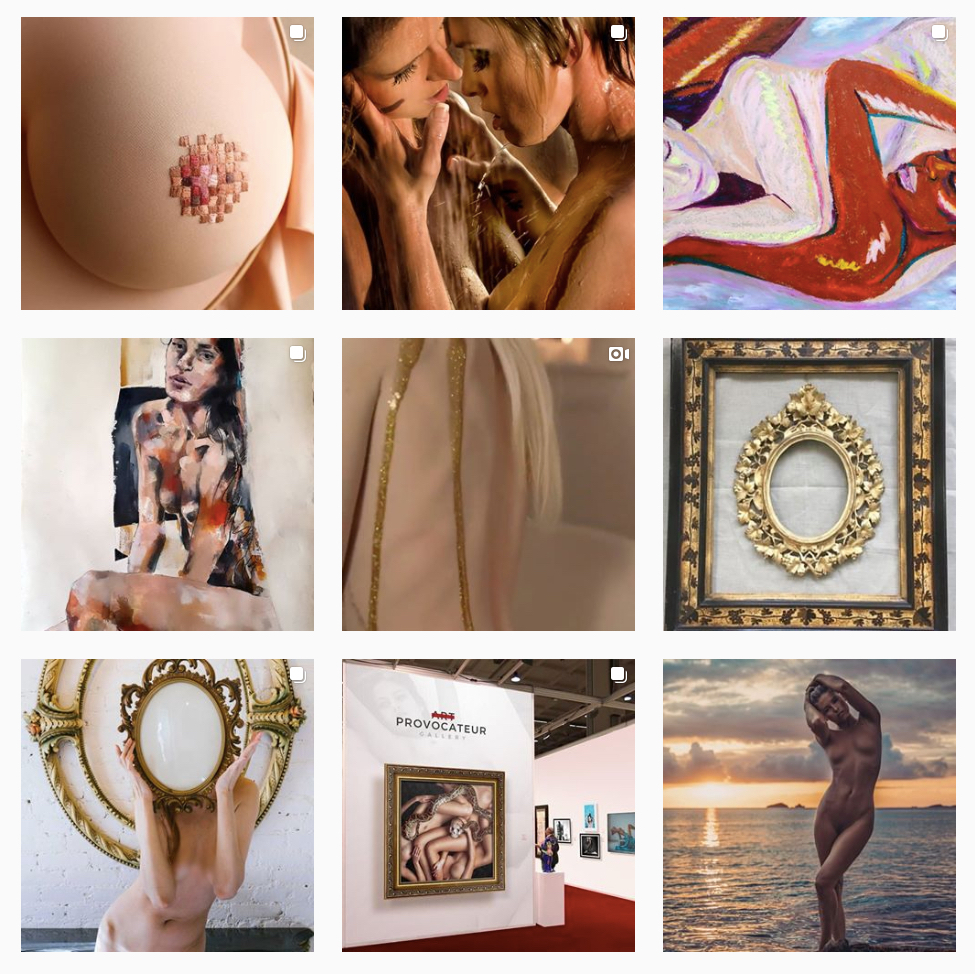
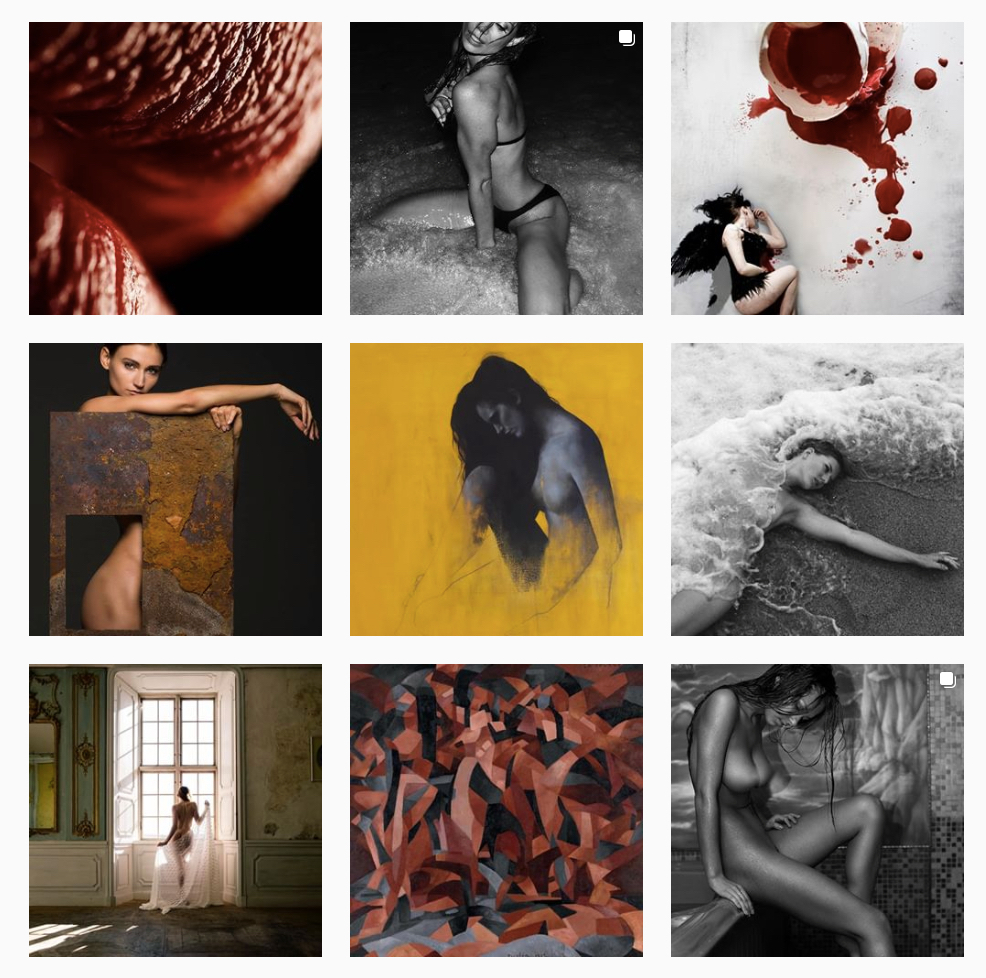
    Art Provocateur Gallery | @art.provocateur

    There has never been so much opportunity for artists to reach their audience, especially for niche genres. However, there are a number of pitfalls and challenges that come along with using social media for self-promotion. We take a look at some of the pros and cons of social media for artists.

    Pros

    Democratization of Art

    The democratization of art comes down to making art more accessible. This mindset is often tied back to the French Revolution, which resulted in a democratization of culture in France. This branched out into the idea of sharing art with the people.

    It’s an important concept in the art world, turning art from a leisure of the elite to something embraced by the people. It helped to revolutionize art in new and interesting ways.

    Art Provocateur Gallery 4
    Art Provocateur Gallery | @art.provocateur

    Today, social media is allowing for the democratization of art at a scale and speed we have never seen before.

    Artists are not only able to better reach the people but they can more specifically connect to people interested in their specific niche. Through the use of hashtags, sharing, mentions, and collaborative work, artists can find like-minded audiences all around the world.

    It’s not just the artists who benefit. Instagram gives regular people the opportunity to keep up with artists and view their latest work at the tip of their fingers. It’s easier than ever for people to appreciate, experience, and connect with art.

    Widespread Distribution

    The use of social media allows for widespread distribution without affecting or devaluing the art. Artists can share images of their art around the world without affecting the number of prints. That allows them to maximize promotion, even if selling limited edition art prints.

    Art Provocateur Gallery 6
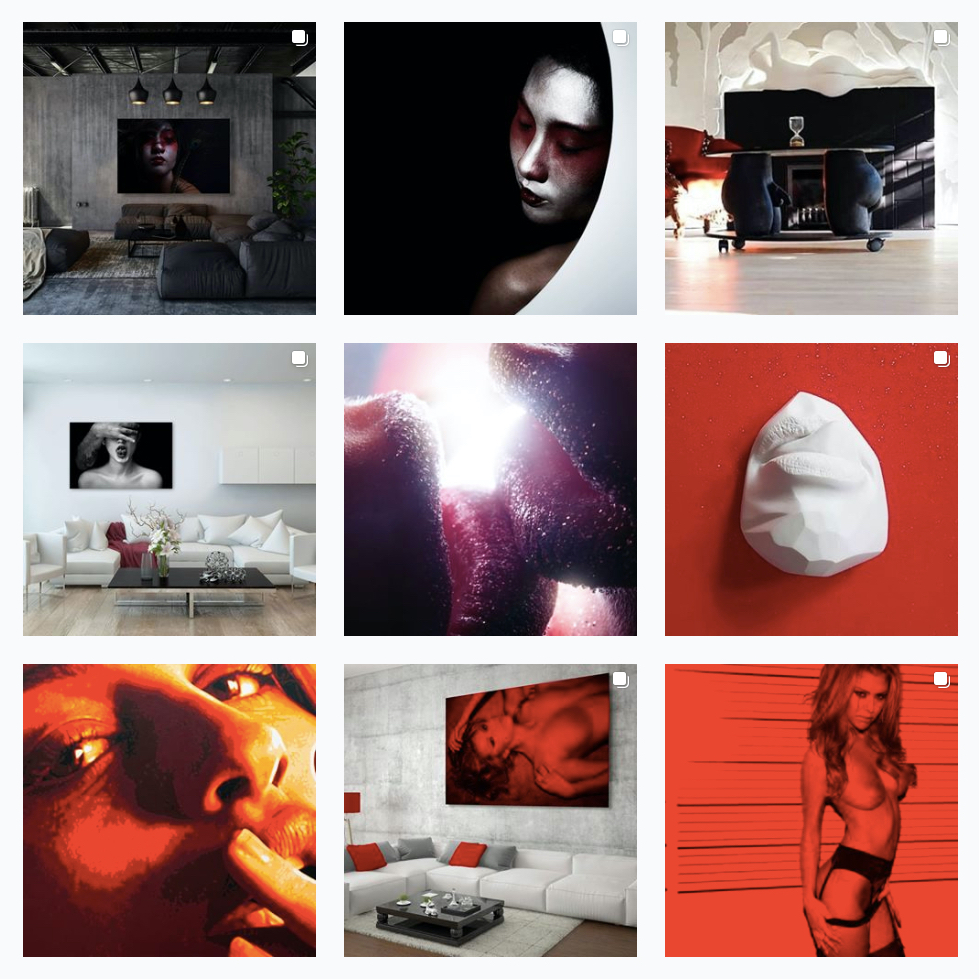
    Art Provocateur Gallery | @art.provocateur

    The artist is now able to share their art with anyone, anywhere in the world – all they need is an internet connection. This especially valuable for more niche genres, like erotic nude art.

    There are a lot of people around the world looking for erotic art prints, but the communities are small in many places. That can limit their access and exposure to the art they’re looking for. Through social media, erotic artists can reach their niche audience more effectively.

    Grow & Connect With Fanbase

    One of the great aspects of artists using social media is that it’s a two-way conversation. Artists have a direct line of conversation with their audience. They get the opportunity to find out what resonates with people, what they want more of, and what they’re hoping to see next.

    Art Provocateur Gallery 2
    Art Provocateur Gallery | @art.provocateur

    Social Media can even help determine the best places for them to set up galleries by seeing where their audience is. Their audience can further help by sharing their posts, growing the artists’ reach and visibility.

    Another popular audience growth technique artists are using on social media is cross-promotion. Through collaboration, sharing, or mentioning each others’ work, artists share exposure with each others’ fanbases.

    Cons

    Banning Accounts

    For many creatives, especially erotic artists, social media can be tumultuous due to seemingly arbitrary rules. Instagram is especially notorious for this. Artist will sometimes receive a ban as a result of the content of their art.

    The problem is, there’s no clear indication of what will cause a ban. Sometimes the platform deems nude art as perfectly fine, other times an artist receives a ban for art that is too suggestive (even without nudity). The rules guiding this are inconsistent, and artists are at the mercy of Instagram’s whims.

    Art.Provocateur Instagram
    Art Provocateur Gallery | @art.provocateur

    This is more than just a concern for censorship. When an artist receives a ban there is often no warning, and they can lose their entire following. While they can set up a new account, they have all the hard work of rebuilding their following. All with the possibility of losing it all again.

    Competition

    Another big challenge is that with social media being so accessible and providing so much opportunity is that there is a lot of competition. There’s a lot of noise out there, and the louder it gets, the harder it is to be heard.

    On social media, artists aren’t just competing with other artists, they compete with every other account. They need to be found in a sea of memes, celebrities, CrossFit videos, heavily-filtered food pictures and so on.

    Art Provocateur Gallery 1
    Art Provocateur Gallery | @art.provocateur

    Having good content and regular posting isn’t enough. Artists need to devise and pursue follower strategies to grow their account. There are loads of strategies ranging from buying followers to bots that schedule mass following and commenting strategies. Artists have to test out different techniques to discover what works best for their specific audience.

    Limited Distribution Options

    When artists share their art through an online art gallery they can offer better distribution options. The gallery can offer superior print quality, framing, shipping options, and service. Many artists on social media are left to their own devices.

    This can mean they need to manage the printing, handling, shipping, and fulfillment themselves. A time-consuming process many artists find tedious and unfulfilling. Their alternative is often using web services that fulfill the printing and shipping for them. Unfortunately, many of these services result in lower profits for the artists and a lower quality product.

    Art-Provocateur-Gallery-8
    Art Provocateur Gallery | @art.provocateur

    Many social media platforms limit what the artist can share. While Instagram allows video and images alike, it only allows a couple of display formats for images. This may not align with the shape and style the artist would prefer their art shown as. Artists need to work within the parameters of the platform. They can also only leave one link that sits on their profile. So fans can’t buy individual art pieces by clicking on the image.

    Follow Art Provocateur Gallery On Instagram

    While there are some challenges in using social media platforms like Instagram, it’s hard to deny the overwhelmingly positive impact they’ve had on the art community. The juice is worth the squeeze for any artist looking to grow their audience or connect with their fanbase.

    Art-Provocateur-Gallery-7
    Art Provocateur Gallery | @art.provocateur

    You can follow us on Instagram @art.provocateur for our erotic art gallery’s latest prints, photos, sculptures, and paintings. Artists looking to sell art online can submit for an assessment to see if your work is the right fit for our gallery.

    Where to Find Erotic Art

    Today, there is no shortage of ways to discover art. Galleries, shows, and social media provide easy access for long time collectors or first-time buyers. Erotic art, however, has remained more elusive. Art Provocateur Gallery is the premier online gallery for erotic art.