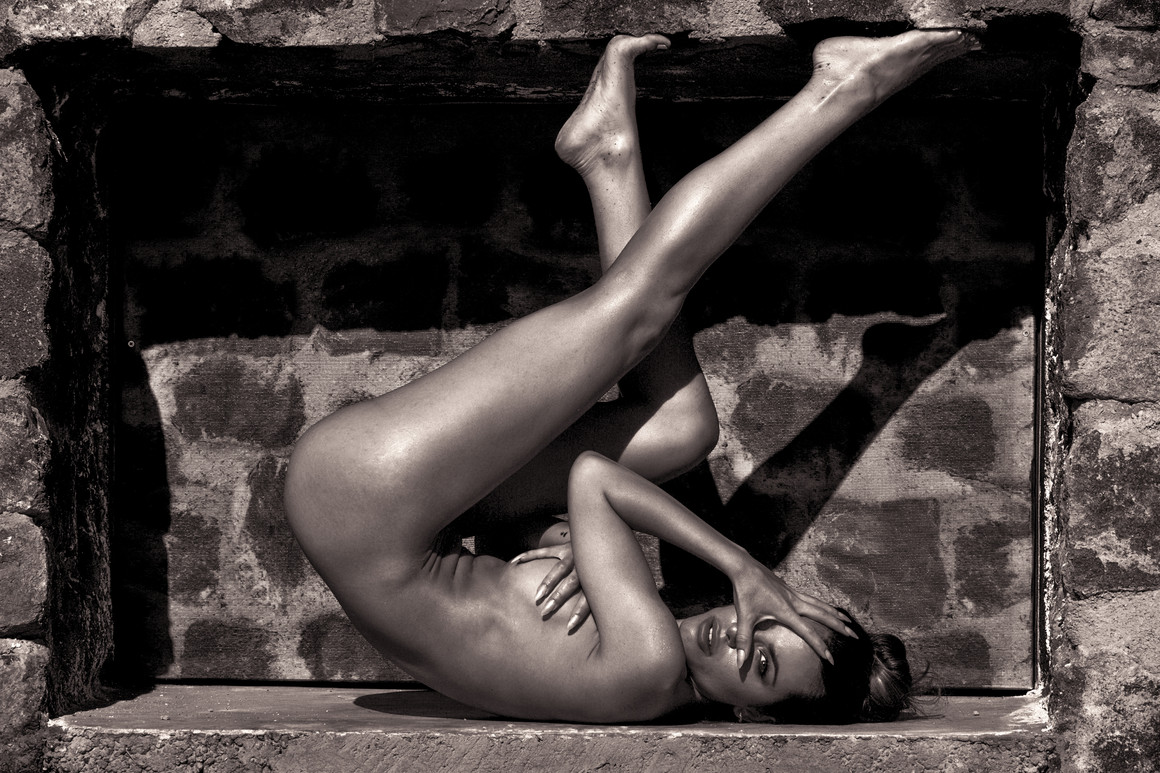
The Reality of Nude Modeling
Nude modeling carries an unusual tension in the public imagination. It is often misunderstood, frequently judged, and almost always reduced to assumptions that have very little to do with the reality of...
Nude modeling carries an unusual tension in the public imagination.
It is often misunderstood, frequently judged, and almost always reduced to assumptions that have very little to do with the reality of the work. In truth, modeling nude for artists, photographers, or fine art projects can be deeply professional, creatively demanding, and, for the right person, surprisingly empowering.
For those who are curious about entering this world, the first step is not simply asking whether you are comfortable being seen. The real question is whether you understand the nature of the work, the boundaries it requires, and the discipline behind it.
If you are considering nude modeling—whether for life drawing, fine art photography, or creative collaborations—there are several things worth understanding before you say yes.
Nude Modeling Is Not Automatically Erotic
One of the most common misconceptions is that nude modeling is inherently sexual.
In a professional art context, that is often not the case at all.
In many settings, the body is approached as form, composition, movement, tension, structure, shadow, and line. Artists study the figure because the human body is one of the most complex and expressive subjects there is. The work may be intimate in appearance, but the purpose is often technical, artistic, or conceptual rather than erotic.
Of course, not all nude imagery exists in the same category. Fine art, editorial work, erotic portraiture, performance art, and commercial projects each operate differently. The important distinction is that nudity itself does not define the intent. Context does.
If you are stepping into this space, understanding the difference between artistic nudity, sensual imagery, and overtly sexual work is essential. They are not interchangeable, and you should never assume they are.
The Work Is Far More Demanding Than It Appears
To the outside world, nude modeling can look deceptively simple.
Stand still. Hold a pose. Let the artist work.
In reality, it can be physically taxing.
Holding a single pose for extended periods requires stamina, body awareness, balance, and patience. Even short sessions can become surprisingly uncomfortable when your job is to remain motionless under bright lights, in a cold room, or in a position that places strain on the neck, back, hips, or shoulders.
There is also a mental component that many first-time models underestimate.
Being unclothed in a professional setting can feel vulnerable, even if the environment is respectful and controlled. The first session is often the most difficult—not because something is wrong, but because you are navigating a new form of exposure, discipline, and self-awareness.
Many people discover that the work asks more of them emotionally than they expected.
And yet, that is also part of what makes it transformative.
There Is No “Ideal” Nude Model Body
One of the most liberating truths about art modeling is that it does not depend on fitting a narrow beauty standard.
In fact, the opposite is often true.
Artists are not always looking for polished perfection. They are looking for character, proportion, contrast, structure, uniqueness, and presence. Different bodies offer different visual challenges and different forms of beauty. Age, softness, height, muscle, asymmetry, scars, curves, posture—these all bring something distinct to the work.
The idea that only one type of body belongs in front of the easel or camera is a commercial fantasy, not an artistic one.
If you are drawn to the experience but worry that you do not look like a conventional model, that concern may matter far less than you think.
Privacy Matters More Than Most People Realize
Many people who model nude do not advertise that fact publicly.
That does not mean they are ashamed of it. It often means they understand the social reality around it.
Despite the long history of the nude in art, many people still project assumptions onto anyone who works in this space. Because of that, some models choose to keep this work separate from other parts of their lives. Others are selective about the types of projects they accept, whether their face is visible, how images may be used, and where those images may appear.
This is especially important in photography.
Before agreeing to any shoot, you should know:
- Where the images will be published
- Whether your face is visible
- Whether the work is anonymous or credited
- Whether the photographer can license or resell the images
- Whether the work is intended for gallery use, editorial use, portfolio use, or commercial distribution
- Whether you are comfortable with the long-term digital footprint
In the age of online circulation, “artistic” does not automatically mean private.
Protecting your identity and understanding usage rights is not paranoia—it is professionalism.
Boundaries Are Not Optional
If you take nothing else from this conversation, take this:
A professional nude modeling experience is built on consent, clarity, and boundaries.
Before a session begins, expectations should be clear. You should know the nature of the work, the type of poses expected, the duration of the session, whether there will be other people present, whether there will be breaks, and exactly how the final work may be used.
No one should pressure you into poses you did not agree to.
No one should touch you without clear prior consent.
No one should make you feel that discomfort is part of “earning your place.”
Professional artists, instructors, and photographers understand this. If someone becomes evasive, dismissive, overly familiar, or vague about the purpose of the work, that is not sophistication—it is a red flag.
The more elevated the art world appears on the surface, the more important it becomes to trust your instincts underneath it.
Life Drawing and Fine Art Sessions Are Their Own World
Modeling for a life drawing class is a very specific kind of work, and for many people, it is the safest and most structured entry point.
In these settings, the focus is educational. Students are studying anatomy, proportion, gesture, composition, and how the body occupies space. The room is usually quiet, disciplined, and surprisingly clinical in its concentration.
For someone new to nude modeling, this can be reassuring.
There is very little ambiguity. The purpose is clear. The boundaries are usually well-established. The model is there as a subject of study, not spectacle.
This is very different from a stylized fine art photo shoot, where mood, expression, sensuality, narrative, and creative interpretation may all be part of the final image.
Neither is inherently better. They are simply different forms of work, and you should know which one you are agreeing to.
The Money May Not Be What People Assume
There is a persistent fantasy that nude modeling is easy money.
In reality, it is often more modest and more variable than people expect.
Rates can depend on:
- Your level of experience
- The city or market you work in
- Whether the work is for a school, private artist, photographer, studio, or commercial client
- Session length
- Usage rights
- Whether the work is live, photographed, published, or licensed
- Whether the project requires anonymity or exclusivity
Some models begin with modest hourly rates while they learn the landscape and build relationships. Others may command more, especially if they have a strong presence, a reputation for professionalism, or are working in photography, where licensing and image use increase the value of the work.
That said, for many people, nude modeling functions best as supplemental income rather than a primary career—unless they are intentionally building a broader modeling practice around it.
If your interest is purely financial, go in with realistic expectations.
If your interest is artistic, personal, or experiential, the value may be broader than the rate itself.
Confidence Is Helpful—But It Is Not Required on Day One
A lot of people assume that anyone who models nude must be effortlessly confident.
That is rarely true.
Many first-time models arrive nervous, self-conscious, uncertain, or hyper-aware of every perceived flaw. Confidence often comes after the experience, not before it.
For some, nude modeling becomes an exercise in body neutrality rather than body pride. It is not always about feeling beautiful. Sometimes it is about learning to exist in your body without apology, performance, or self-punishment.
That shift can be powerful.
Not everyone experiences it, and not everyone should force themselves into it. But for the right person, the work can become unexpectedly grounding—less about being looked at, and more about reclaiming the experience of being seen on your own terms.
Not Every Opportunity Is Worth Taking
Because nude modeling sits in a grey zone between art, commerce, and personal exposure, discernment matters.
Before saying yes, ask yourself:
- Do I trust the person or institution?
- Is the purpose of the project clearly defined?
- Do I understand how the images or sketches will be used?
- Am I being compensated fairly for the scope of the work?
- Am I comfortable with the aesthetic, tone, and intention of the project?
- If this work existed online forever, would I still be comfortable with that?
- Is this aligned with my boundaries, or am I talking myself into it?
You do not need to say yes because someone calls it “art.”
You do not need to say yes because someone says you are “perfect for it.”
And you do not need to say yes because the opportunity feels flattering.
The right project will withstand questions.
Final Thoughts
Nude modeling is not scandalous by default, and it is not effortless by design.
At its best, it is disciplined, collaborative, vulnerable, and highly intentional. It can be an extraordinary creative experience. It can be empowering. It can be uncomfortable. It can be liberating. And sometimes, it can be all of those things at once.
What matters most is not whether you are willing to take your clothes off.
What matters is whether you understand the setting, trust the people involved, respect your own limits, and know exactly what you are agreeing to.
In the right hands, nude modeling can be art.
In the wrong hands, it becomes something else entirely.
Choose accordingly.